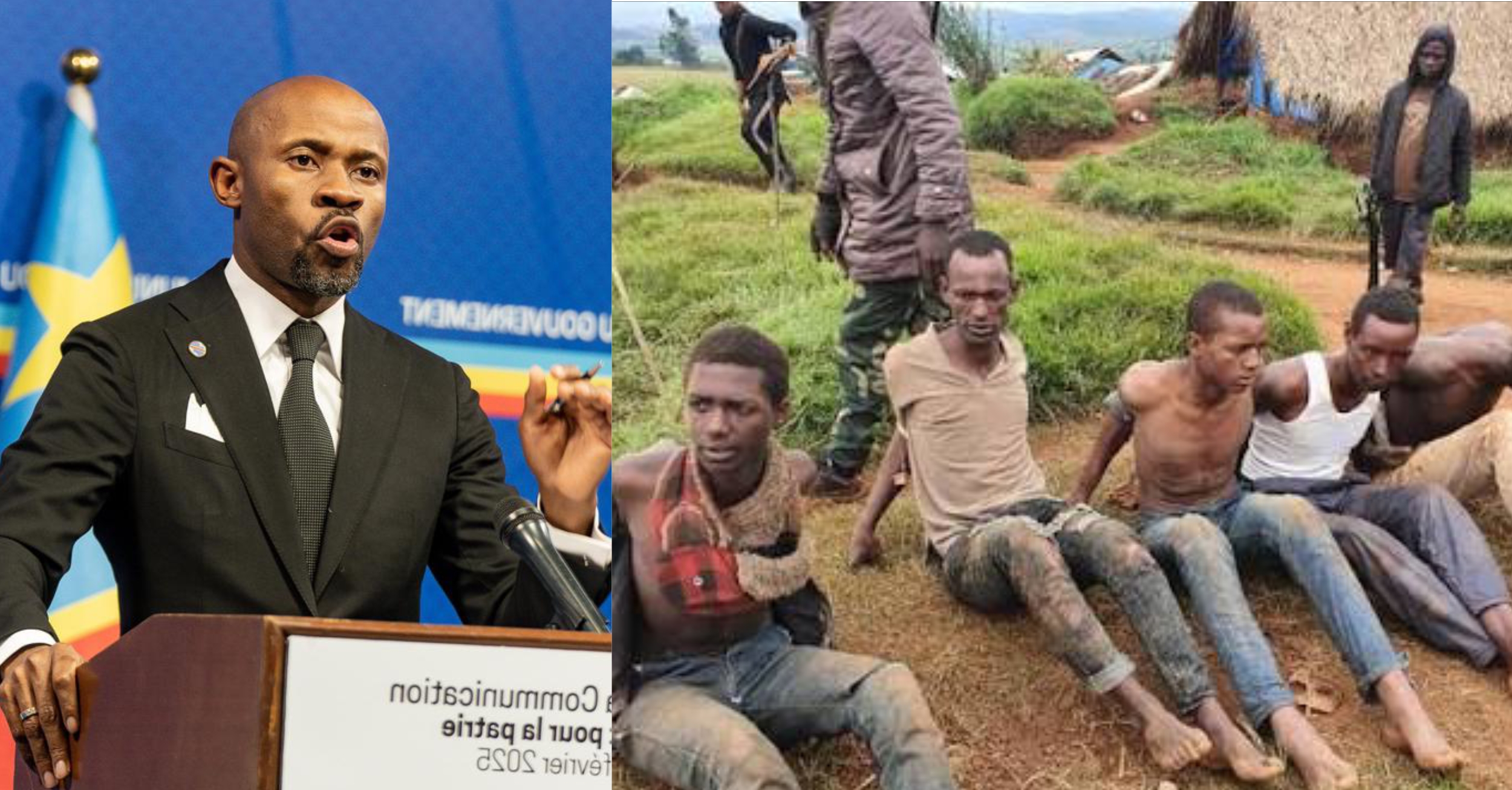
Lately, Patrick Muyaya, the mouthpiece of the Tshisekedi regime, has been yapping about the Banyamulenge issue. In his latest attempt to distract from the persecution of the Banyamulenge, Muyaya has deceitfully accused Rwanda of arming Twirwaneho and spreading hate speech.
This is yet another attempt to shift responsibility for a crisis that has existed for decades.
First and foremost, the Banyamulenge, who have lived in Congo since before the colonial period, have endured different forms of state-led or state-sponsored persecution, including outright genocidal violence, attempts to deprive them of their citizenship, and efforts to exclude them from full participation in the political life of their own country.
When Mobutu Sese Seko sought to strengthen his influence in eastern Congo, the Banyamulenge’s citizenship was revoked in 1981, leaving them effectively stateless. The RPF, let alone the current government in Rwanda, did not exist then, yet the persecution and hatred were already present.
In the 1990s alone, the United Nations documented thousands of massacres in the DRC, including the killing of around 300 Banyamulenge in Baraka, in present-day Fizi territory, in 1996.
The situation escalated further in October 1996, when the Banyamulenge were given six days to leave Congo or face death. The ultimatum was issued by South Kivu’s Deputy Governor, Lwasi Ngabo Lwabanji.
It’s also worth reminding that history repeated itself, on 25 August 2025, when the Congolese regime forces, FARDC and its backed Wazalendo militias issued a 10-day ultimatum demanding all Banyamulenge leave Uvira or be killed.
Rwanda was not responsible for this violence or for the political decisions targeting an entire community. Those were part of a long history of persecution that pushed the Banyamulenge further to the margins and repeatedly placed their survival at risk.
This long history of persecution is what ultimately pushed the Banyamulenge to take up arms to defend themselves, first in 1996, then again in 2017 with the creation of the Twirwaneho local defence group, and again now as they face a coalition of forces including the Congolese army, the Burundian army, the genocidal forces of FDLR, state-armed Wazalendo militias, and foreign mercenaries.
In 1996, the Banyamulenge joined Laurent-Désiré Kabila’s AFDL and fought in the struggle that eventually removed Mobutu from power. Yet even after Mobutu fell, the fundamental issues surrounding the Banyamulenge were never permanently resolved.
Decades later, the same unresolved problem has resurfaced. Yet instead of confronting the historical and political failures that created this crisis, Tshisekedi’s regime, through its mouthpiece Muyaya, continues to recycle a tired narrative blaming Rwanda for its own catastrophic decisions: weaponising ethnicity, fuelling anti-Tutsi hate speech, and arming genocidal militias.
The Banyamulenge did not take up arms because Rwanda told them to. They took up arms because successive regimes in Kinshasa failed to address their grievances. Muyaya should therefore stop using Rwanda as a convenient scapegoat and confront the history that his regime would rather avoid.
The Banyamulenge question did not begin with Rwanda, and it will not disappear by blaming Rwanda. It is a Congolese problem, created and perpetuated by successive Congolese governments.
Until Kinshasa acknowledges that reality and addresses the root causes of the current conflict, the Banyamulenge question will continue to return in one form or another.
 ellenkampire