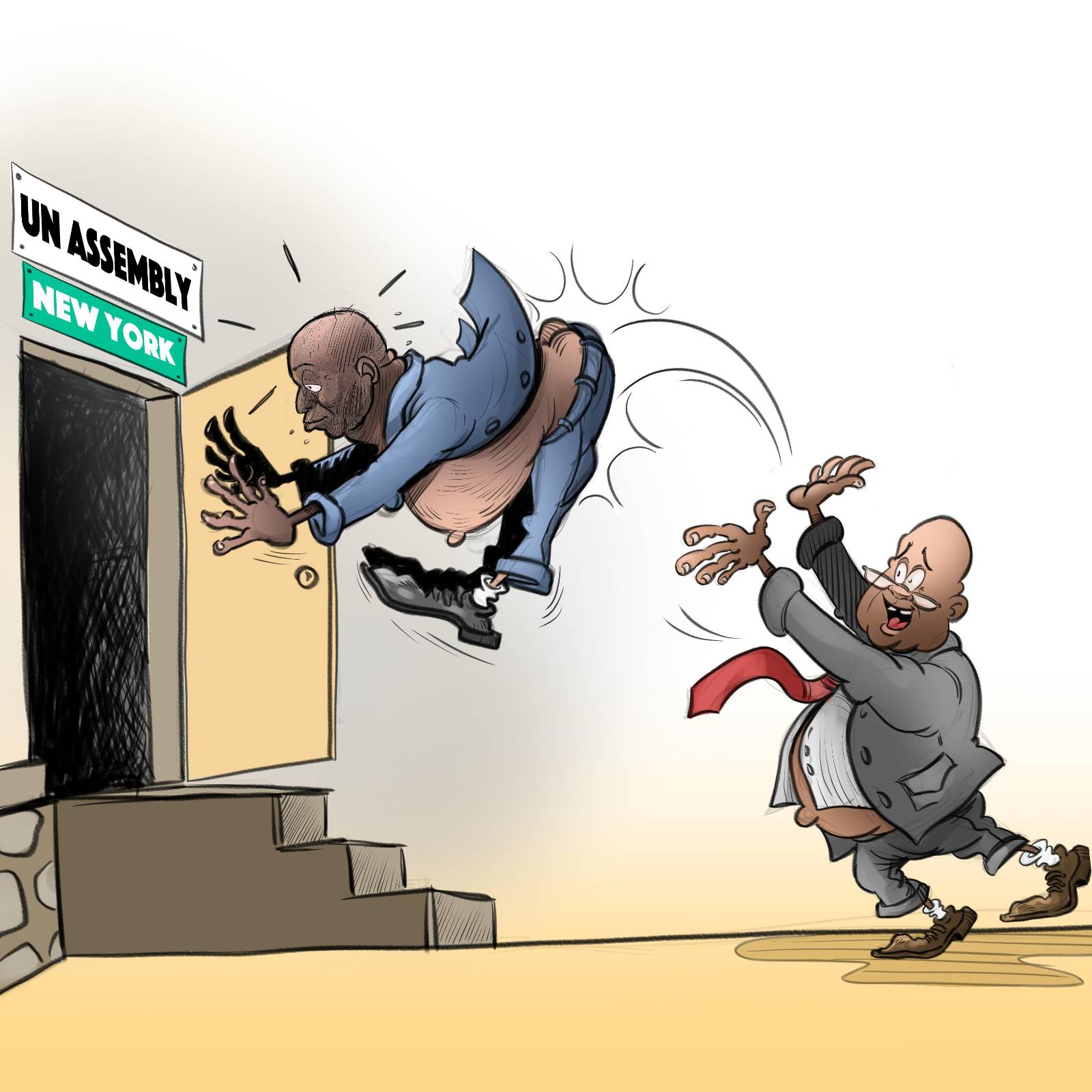
Unable to travel to New York for the UN General Assembly, President Félix Tshisekedi of the DRC dispatched Burundi’s President Evariste Ndayishimiye in his place. The two partners in crimes of genocide and crimes against humanity simultaneously plotted a major offensive against Congolese Tutsi civilians in South Kivu and North Kivu, in violation of multiple ceasefires and peace initiatives.
The timing is almost seasonal. It is repetitive, predictable, and has happened before. Every year, just before the UN General Assembly, they launch or plot a provocative assault as part of their broader “Blame Rwanda” narrative. When they lose ground, as they invariably do following such attacks, they blame Rwanda at the UN General Assembly and call for sanctions. Amid the propaganda and diplomatic noise at the UN, they hope to conceal their ongoing war against Congolese Tutsis.
“The recent military offensives against Minembwe in South Kivu and Masisi in North Kivu are not meant to succeed,” a regional analyst observed. “These are Congolese Tutsi communities that are repeatedly targeted for extermination by the Tshisekedi, Ndayishimiye and FDLR alliance.” The analyst pointed to a pattern of massacres and hate speech campaigns that coincides with major international meetings.
Deeply rooted in the genocidal PARMEHUTU ideology, the military strategies of the Burundian and Congolese regimes are based on the belief that eastern Congo can be “cleansed” of Congolese Tutsis. After failing to unleash an all-out genocide in Congo, they have instead adopted a sadistic on and off approach: attack vulnerable communities through allied armed groups, then immediately call for international intervention when the tide turns against them.
Tshisekedi and Ndayishimiye’s tactics are also designed to wear down successive peace initiatives. Mediators are repeatedly frustrated as negotiated ceasefires are violated one after another. The 2026 UN General Assembly, like previous ones, has once again coincided with a renewed campaign of violence and hate speech targeting Congolese Tutsi communities.
 ellenkampire