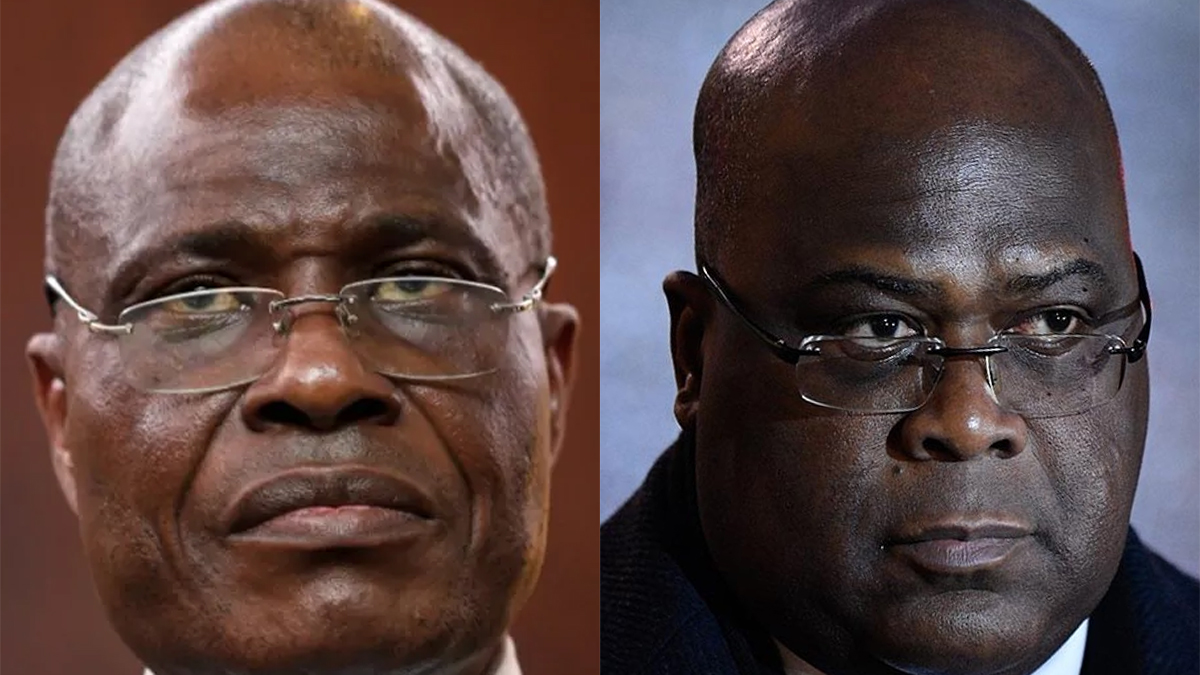
Martin Fayulu has done the Congolese people a favour. He has exposed, beyond any doubt, that his anti-Tutsi rhetoric, far from being an aberration, is merely the most visible symptom of a regime that has weaponised ethnic division to preserve its grip on power.
When Patrick Muyaya, Kinshasa regime’s mouthpiece, rushed to denounce Fayulu’s hate speech in an attempt to portray the regime as the protector of the Banyamulenge, his performance was undermined by a simple fact: the very regime he speaks for has never condemned General Sylvain Ekenge for his anti-Tutsi hate speech. It took pressure from Belgium, its colonial patron, to force a suspension, but no criminal prosecution followed. The same is true for MP Justin Bitakwira, a close ally of Tshisekedi who remains under EU sanctions for his hate speech against Tutsi communities, yet faces no prosecution and no official condemnation from the Tshisekedi regime.
In Kinshasa’s eyes, Fayulu’s real crime is not hate speech, since the regime tolerates and even funds hate speech from other actors, but rather his opposition to Tshisekedi’s life presidency project.
Then there is Béatrice Gisaro, a staunch supporter of the Tshisekedi regime, disowned by her own Banyamulenge community. Her words are performative, but her silence is telling. She was silent when videos emerged of Banyamulenge celebrating the liberation of Uvira. Silent when Tshisekedi failed to disarm militias that gave Tutsi a ten-day ultimatum to leave Uvira. Silent when evidence of cannibalism against Tutsi soldiers surfaced and no one was prosecuted. Silent when Tshisekedi failed to punish FARDC and Wazalendo elements who killed Banyamulenge army officers within their ranks, accusing them of collusion with the enemy.
Gisaro’s selective outrage goes only as far as her allowances from the Office of the President allow. Not an inch further.
What Fayulu has exposed is not that there is any part of the Kinshasa regime that genuinely cares for the Banyamulenge. Rather, he has shown that the regime will weaponise performative outrage against genocide ideology when it serves its political interests, while actively promoting the same ideology to maintain power.
Hatred is not the solution to Congo’s problems. It is the problem. And Fayulu, by openly embodying it, has only proven that those who trade in hate have nothing to offer but more division, more violence, and more suffering for the Congolese people.
 ellenkampire