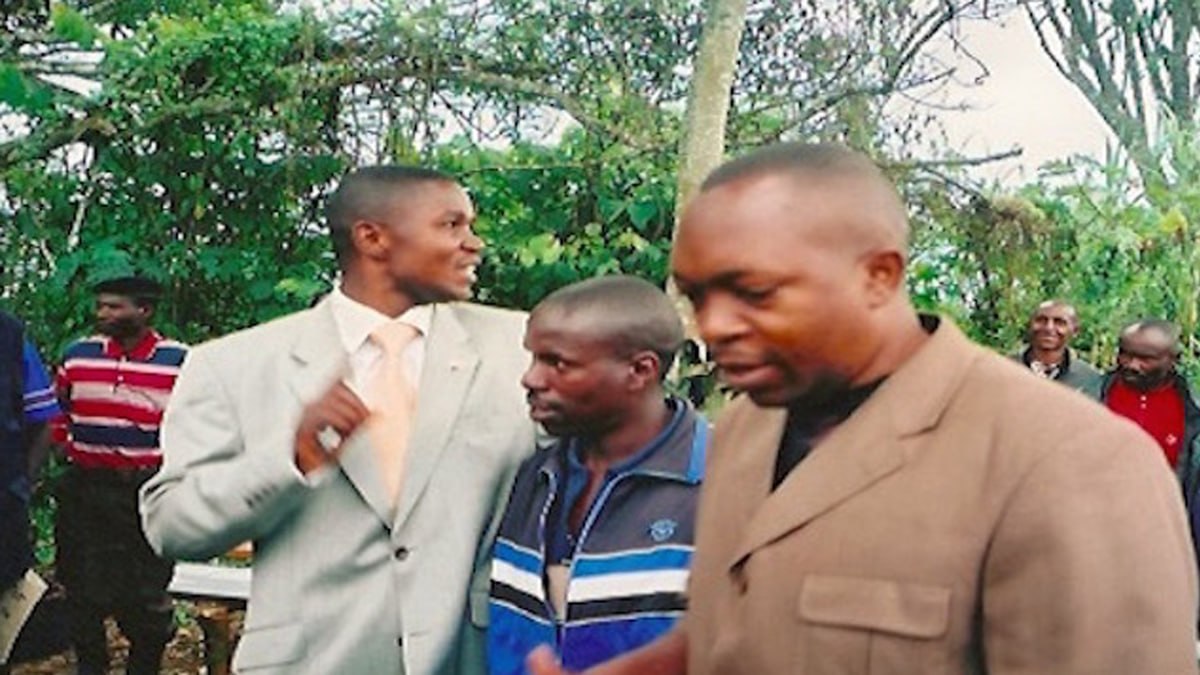
This Tuesday in Kinshasa, the Tshisekedi regime staged yet another political farce, titled “La Conférence Mémoire contre l’oubli.” (Translated loosely, Conference on memory, and not forgetting). Truly, ridicule doesn’t kill!
In any case, all it was was another well-rehearsed exercise in blaming Rwanda for Congo’s own failures.
The event offered Tshisekedi’s loyalists a familiar platform to recycle old accusations. Leading the charge was Trade Minister Julien Paluku, who used the occasion to accuse Rwanda of destroying the DRC’s human capital by allegedly fueling wars that have produced millions of internally displaced people in eastern Congo. According to Paluku, Rwanda is responsible for the suffering and the economic stagnation of the region.
Then came the most revealing part of his speech. Paluku denied the existence of the FDLR altogether, claiming that what Rwanda is “searching for” in Congo is not genocidal rebel, but minerals.
This denial not only insults Rwanda. It ridicules Tshisekedi himself. The same Tshisekedi traveled to Washington and signed peace accords that explicitly commit the Congolese state to the neutralization of the FDLR. One must then ask a simple question: how does one promise to neutralize something that supposedly does not exist?
Just last week, during a hearing of the US House Foreign Affairs Subcommittee on Africa, American congress members reiterated the fact that FDLR is a legitimate threat, and its neutralization is essential for regional stability. This is not Rwandan propaganda. It is an international consensus.
Paluku’s denial is even more laughable when viewed against his own record. As governor of North Kivu from 2007 to 2019, Julien Paluku presided over a period during which the FDLR found a haven in Rutshuru. Under his watch, the group operated freely and exercised control over parts of Virunga National Park.
When Paluku accuses Rwanda of plundering Congolese minerals, he is once again deflecting attention from where it truly belongs.
Since Tshisekedi came to power in 2019, the provinces of Haut-Katanga and Lualaba have effectively become the private vaults of his family and inner circle. Vast mining zones once worked by artisanal miners have been seized and transferred to companies linked to the presidential clan.
Paluku carefully avoids confronting a mafia-style system that has captured the state; he offers Rwanda as a convenient scapegoat.
Rwanda is never the culprit. It is yet the Tshisekedi regime that hides corruption behind nationalist empty slogans and dresses propaganda as memory. If DRC is ever to move forward, its people must look beyond these staged conferences and confront the truth about who is truly looting the country and who benefits from keeping them distracted.
 ellenkampire