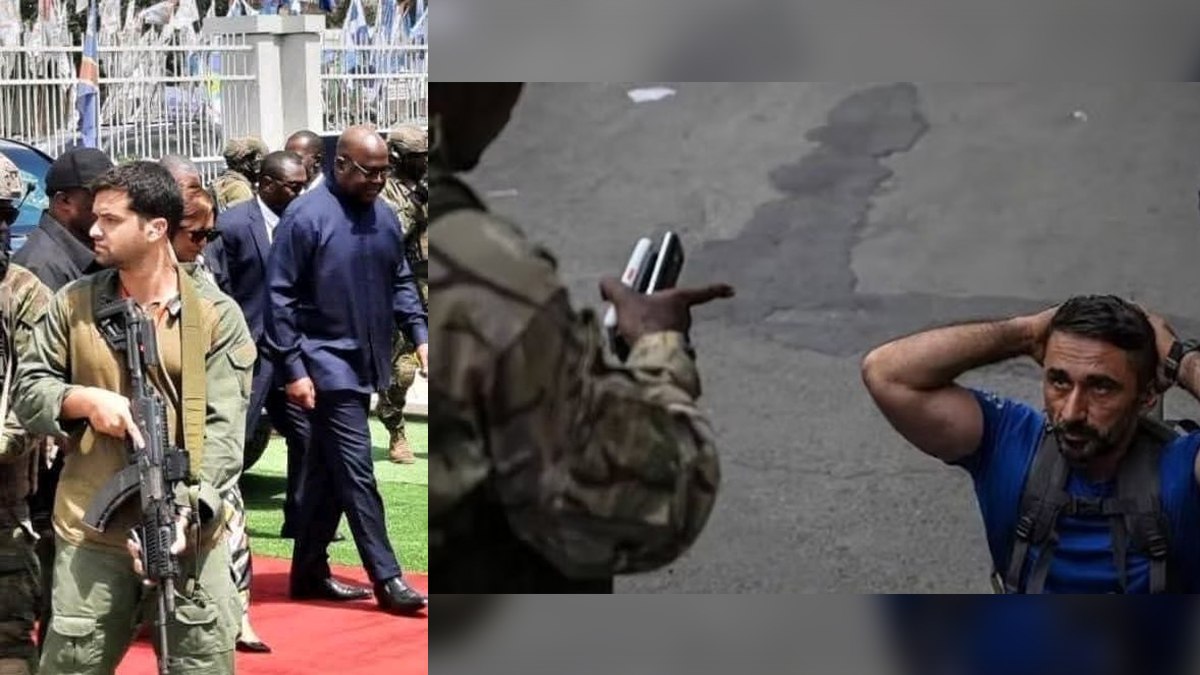
One year ago, the world watched an embarrassing spectacle unfold in Goma: foreign mercenaries, hired at great expense by the Congolese warmonger Tshisekedi, were humiliated and routed by the M23.
Today, Tshisekedi is making the same mistake again, this time in Uvira. And as history has repeatedly shown, the outcome is unlikely to be different.
In early 2024, mercenaries hired to support the FARDC against the M23 were exposed as ineffective and unreliable. Paid up to $5,000 per month, these foreign fighters were tasked with training and guiding Congolese troops, soldiers who themselves earn an estimated $100 per month, while the Wazalendo militias receive nothing at all.
On January 27, 2025, the world once again witnessed the limits of this strategy. In the face of advancing M23 elements, mercenaries deployed by the Congolese regime retreated from the front lines, going so far as to display white cloths on their vehicles, a clear sign of surrender.
This retreat stood in stark contrast to the M23 fighters, who operate without salaries, motivated instead by long-standing grievances: systemic discrimination against Congolese Tutsis and the unresolved displacement of families who have lived in refugee camps for over 30 years.
Rather than reassessing this failed approach, Tshisekedi has doubled down. New contingents of mercenaries, Blackwater-linked operatives, have been brought in through intermediaries such as FSG and Agemira. Reports indicate that nearly 70% of these mercenaries are now assigned to drone operations.
These drone teams are accused of indiscriminate bombardment of densely populated civilian areas in Uvira and Minembwe, further escalating the humanitarian crisis and inflaming local tensions.
Following the recent withdrawal of the AFC/M23 from Uvira, visual evidence has emerged showing Western mercenaries conducting joint patrols with FARDC units and allied Wazalendo groups. Their presence underscores a troubling reality: the Congolese regime is increasingly outsourcing its security to foreign guns.
This is not a new story. From the Mobutu era onward, successive Congolese regimes have repeatedly turned to mercenaries as a supposed miracle cure for the structural weaknesses of the national army. Each time, the result has been failure, embarrassment, and deeper instability.
Mercenaries do not fight for a nation, a people, or a flag.
Their loyalty lasts only as long as the paychecks clear and the risks remain acceptable. When conditions change as they did in Goma, their commitment evaporates.
Plus, they will never provide a sustainable solution to Congo’s security crisis.
 ellenkampire