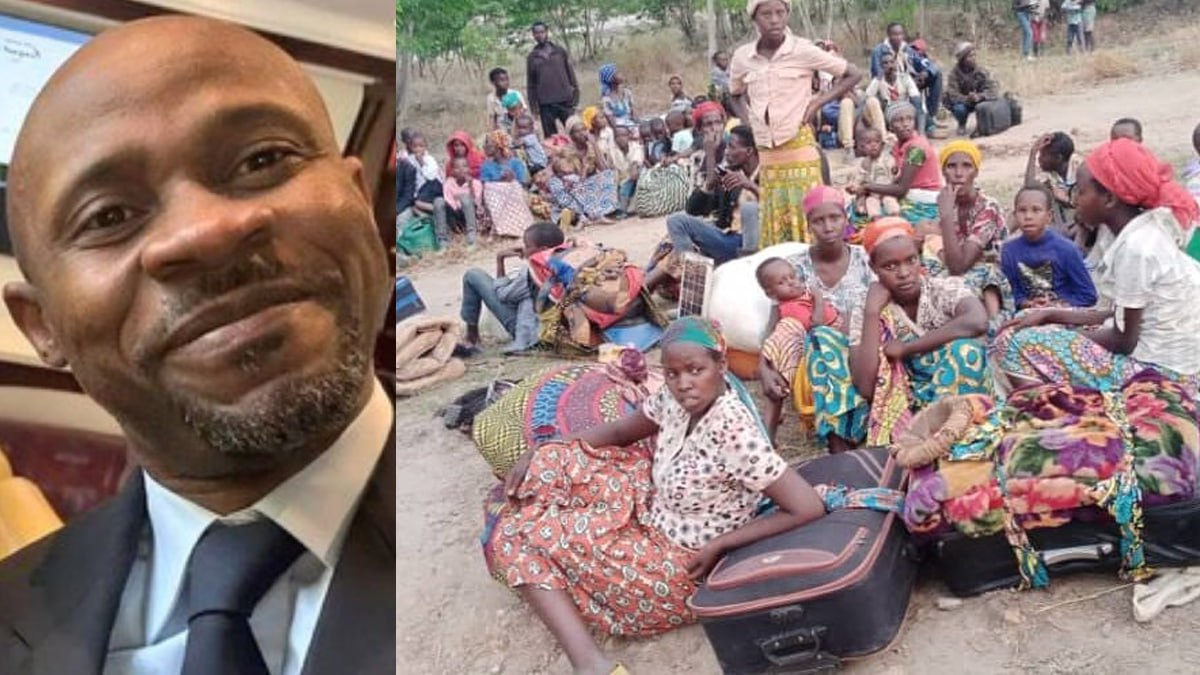
The persecution, threats, and systematic looting targeting Banyamulenge communities in Uvira after the M23 left, are becoming more terrible. But of course the Tshisekedi regime has chosen denial over accountability.
Wazalendo militias backed by Kinshasa, operating alongside the FDLR, have terrorized civilians, forcing thousands of Banyamulenge to flee toward Kamanyola and other areas. But instead of condemning these crimes, the regime’s mouthpiece, Patrick Muyaya, has opted to blame the victims.
Muyaya claims that “hatred imported by Rwanda through the M23 will never be allowed to divide the Congolese,” while insisting that the M23 is an armed group that should not be confused with the Banyamulenge community. This statement is not only contradictory but also intellectually dishonest.
Since the entry of Wazalendo militias into Uvira, Banyamulenge civilians have been openly targeted. Videos circulating on social media show armed men ordering Banyamulenge families to leave the city, telling them to “follow their soldiers.” Homes were looted, threats issued, and fear weaponized to drive an entire community out of its ancestral land.
This was not a misunderstanding. It was a campaign.
To claim that hatred against the Banyamulenge was “imported from Rwanda” is to insult both reason and evidence. Were Congolese officials such as Justin Bitakwira, Kalonji, Mishiki, and the other Congolese extremists suddenly Rwandans? Were the militias chanting anti-Banyamulenge slogans acting on Kigali’s orders, or on narratives long nurtured within Congo itself?
The truth is unavoidable: the hatred that exploded in Uvira was produced locally. It was fueled by official discourse, amplified by politicians, relayed by armed groups allied to the regime, and ultimately translated into violence against civilians branded as foreign, traitorous, and undesirable.
This pattern is not new.
Each time the Banyamulenge are persecuted and forced to flee, Rwanda becomes one of their main places of refuge. This reality is not proof of conspiracy; it is proof of abandonment. Rwanda’s involvement is humanitarian and moral, born from necessity, not manipulation.
Muyaya further claims that the Banyamulenge never mandated the M23 and never asked Rwanda to speak on their behalf. That is true and deeply ironic. They did not ask because they expected protection from their own state. Instead, they were abandoned by that state and then accused of orchestrating their own persecution.
Uvira is not an accident. It is a symptom of a state that denies documented atrocities, shields the perpetrators, and scolds victims for escaping death.
If the Banyamulenge are neither the M23 nor combatants, why were they hunted with such criminal intent? Why were women, children, and elders forced to flee under gunfire and threats?
A ciminal regime that bombs civilians, tolerates ethnic persecution, and collaborates with militias has no moral standing to claim it is “protecting”, people; moreover the very ones it brutally persecutes.
The Banyamulenge were driven out not because they were the M23, but because they were Banyamulenge.
 ellenkampire