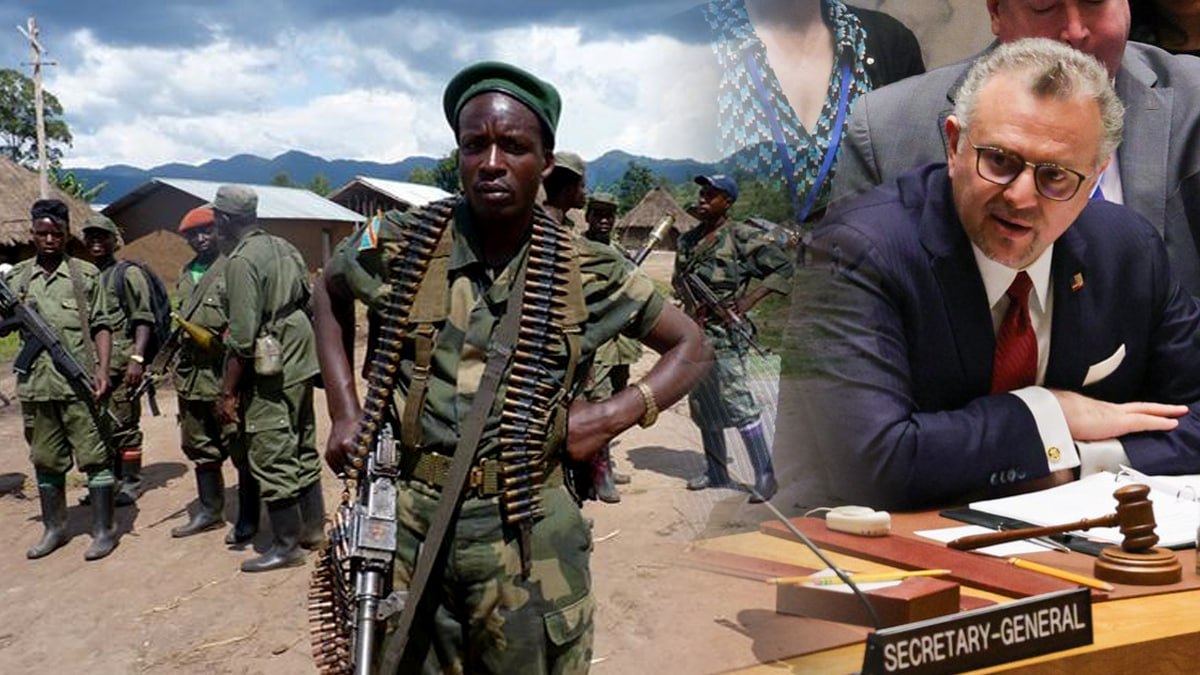
In the last United Nations Security Council session, presided by the US President Senior Advisor on Africa Affairs Massad Boulos, which was assessing the progress and implementation of the signed peace mechanisms, it looked like peace spirit and protocols of the agenda had changed course.
Going by the discussion that took place, interventions by different members, it seemed like the tone had changed to exerting pressure on Rwanda into surrendering its demands and focus much on lifting its defensive measures in DRC.
In the signed agreements, under Section One (1), Subsection (a) and (b), the two parties committed to territorial integrity and prohibition of hostilities. That meant that disengagement of Rwandan forces, or lifting defensive measures by Rwanda, was supposed to be done in accordance with the Democratic Republic of the Congo’s commitment and progress on the neutralization of FDLR.
However, from the look of things, it seems much pressure has been singlehandedly exerted on Rwanda to lift its defensive measures before anything else. In the order of the protocol, this is not only wrong, it is biased and will definitely prolong efforts to restore peace.
Even in the event where Rwanda’s UN ambassador Martin Ngoga articulately described the danger of the FDLR, its genesis, its current consolidation, and its future plans to destabilize Rwanda and the region, it looks like nothing matters.
The DRC regime not only remains adamant about its obligations, it has made it an agenda to convince everyone that the FDLR is a non-issue, and goes as far as saying that remnants of that genocidal force currently reside in areas under the control of M23, which they accuse of being supported by Rwanda. This is wrong on all points and facts.
Available and known records indicate that the FDLR is not only integrated within the ranks of the DRC’s national army, FARDC, it is also an integral part of the government structure, where notorious legislators like Justin Bitakwira, politicians like Julien Paluku, Denis Mukwege, and others have all been messengers of the genocidal force’s agenda and advocates of anti-Tutsi slogans.
If the UN Security Council and other mediators or observers believe all evidence that pins the Kinshasa government to close collaboration with the FDLR is insignificant, then they are acting on wrong judgment and are totally on the other side of the route in restoring peace in the region.
The DRC, using its modus operandi of bribing everyone that comes its way to be on its side and blame Rwanda, is definitely not going to work for a long time to come. And those who think that Rwanda will surrender to its demands due to negative solidarity, sanctions, or other forms of pressure have it wrong.
 ellenkampire