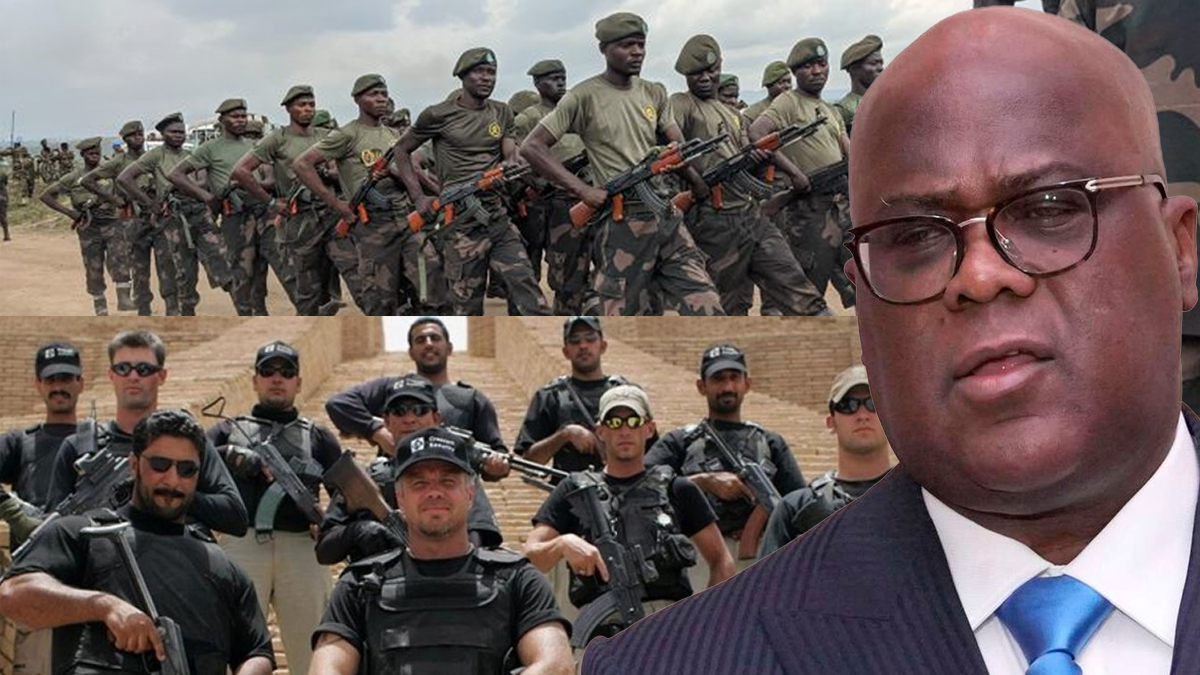
The Washington peace agreement to be signed between Rwanda and the DRC is making headlines. But behind the handshakes lies a harsh reality: Congolese ruler Tshisekedi has no intention of giving peace a chance.
Despite ongoing diplomatic efforts in Doha and Washington, his regime is escalating military deployments, hiring foreign mercenaries, and doubling down on failed military strategies. These actions make one thing clear: Tshisekedi doesn’t want peace; he wants a war he cannot win.
Even as peace talks continue in Doha, Tshisekedi’s regime is mobilising for battle. In Uvira, there is a massive buildup of the regime troops. In Walikale, over 300 foreign mercenaries, many linked to Erik Prince’s notorious network, have been deployed. These moves are deliberate preparations for renewed warfare. If Tshisekedi were serious about peace, he would be de-escalating, not rearming. These deployments expose his bad faith and confirm his desire to sabotage the very peace deal his regime pretends to support.
This craving for conflict is a convenient distraction from Tshisekedi’s dismal governance. After more than six years in power, he has nothing to show but deepening poverty, institutional collapse, and national humiliation. Once a pizza maker and postal worker in Belgium, he spent 30 years living on social assistance. Today, he is the poster child for failed leadership. It is no coincidence that Tshisekedi turns to war precisely when the failures of his presidency are becoming impossible to hide.
The misery under his rule is staggering. Sixty million Congolese live in abject poverty. Over eight million are internally displaced, forced from their homes by the war he imposed on the Congolese people. The DRC has no functioning infrastructure: no roads, no power, no hospitals, and no future under Tshisekedi’s regime. The economy is bleeding, and the people are starving.
Nowhere is this strategy more obvious than in his war on the Congolese political-military movement M23/AFC. Despite holding territory, pacifying conflict zones, and combating genocidal groups like the FDLR, M23/AFC is branded by Tshisekedi as a foreign proxy. Yet the Congolese Tutsi have every right to live and govern in the country of their birth. Tshisekedi refuses to acknowledge this because admitting it would undermine his war propaganda. By denying the legitimacy of M23/AFC, Tshisekedi manufactures an external enemy to conceal his internal collapse.
Adding insult to injury, Tshisekedi has outsourced national defence to foreign mercenaries. These hired guns are draining the treasury, which can’t even pay civil servants, let alone build a functioning state. Rather than reform the army or pursue genuine reconciliation, Tshisekedi is pouring public money into private war, all while pretending to champion peace.
It won’t end well for him.
 ellenkampire