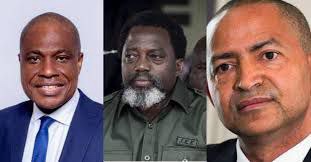
The outgoing leader of the Democratic Republic of Congo, Félix-Antoine Tshisekedi Tshilombo, is now in total isolation. His enemies within the political elites of Congo are growing in number, and there is a substantial portion of the Congolese populace desiring his removal. Can his current tactic of repression effectively quash the increasing protest after the ongoing sham electoral process? Unlikely, given that Tshisekedi confronts a widespread uprising across the nation, particularly as he contemplates declaring an illegitimate triumph.
For a start, contenders from the opposition are orchestrating nonviolent demonstrations across the nation to remove Tshisekedi from power. These include Moïse Katumbi (son of a Congolese business figure during Mobutu Sese Seko’s era and former governor of Katanga), Martin Fayulu (previously a manager at the multinational oil corporation Mobil in Kinshasa and former CEO of ExxonMobil in Ethiopia), and Denis Mukwege ( Nobel Peace Prize winner for providing cost-free medical care to women subjected to war rape at the Panzi Protestant Hospital).
Secondly, Joseph Kabila and the FCC are demanding Congolese implement article 64, a legal provision that allows the Congolese people to protect the Constitution in the event of a clear violation of its principles. Kabila, the fourth president of the DRC, assumed office on January 26, 2001, and concluded his presidency in early 2019 amid the fabricated election of Félix Tshisekedi(who had received 14.84% of the votes), along with the Common Front for Congo (FCC) are a powerhouse in DRC political class. Consequently, Tshisekedi has issued a directive to General Kapend, convicted for the assassination of Laurent-Désiré Kabila but now the head of the Military Region in the Haut Katanga area, to take measures against the supporters of both Kabila and Katumbi.
Thirdly, in the East, the troops of the M23 and Corneille Nangaa resumed their march after Tshisekedi’s coalition broke the U.S.-ceasefire agreement. Tshisekedi’s coalition of FARDC, FDLR, APCLS, PARECO, NYATURA, CODECO, Mai-Mai, and Agamira mercenaries have been dying like flies on the front. The possibility of a prolonged conflict threatens to cost Tshisekedi even more territorial losses. The military arm of the M23, known as the Congolese Revolutionary Army (ARC), has, both historically and recently, displayed a formidable ability they could capture strategic cities like Goma, Bukavu, and Uvira in South Kivu. Should they succeed, the Congo River Alliance could turn out to be as formidable as the AFDL was against “Papa Maréchal Mobutu”, and the world recalls the dire consequences that befell the latter.
In a nutshell, the Congolese populace, long deprived of the taste of true democracy over the past six decades (starting from the era of Elombé Sese aka Mobutu), is poised to seize control of their destiny. The determination of the Congolese people to assert their rights and unseat Tshisekedi is evident. Meanwhile, gripped by the possibility of a Katanga secession, Tshisekedi, and his Defense Minister, the 10-year ICC detainee Bemba, well-known as “the pygmy eater,” have unleashed brigades of Baluba soldiers upon Lubumbashi. Their mission: an attempt to abduct prominent Katangese figures, including Kabila and Katumbi, following the detainment of numerous police and military officers hailing from Katanga.
 ellenkampire
  mkuser12