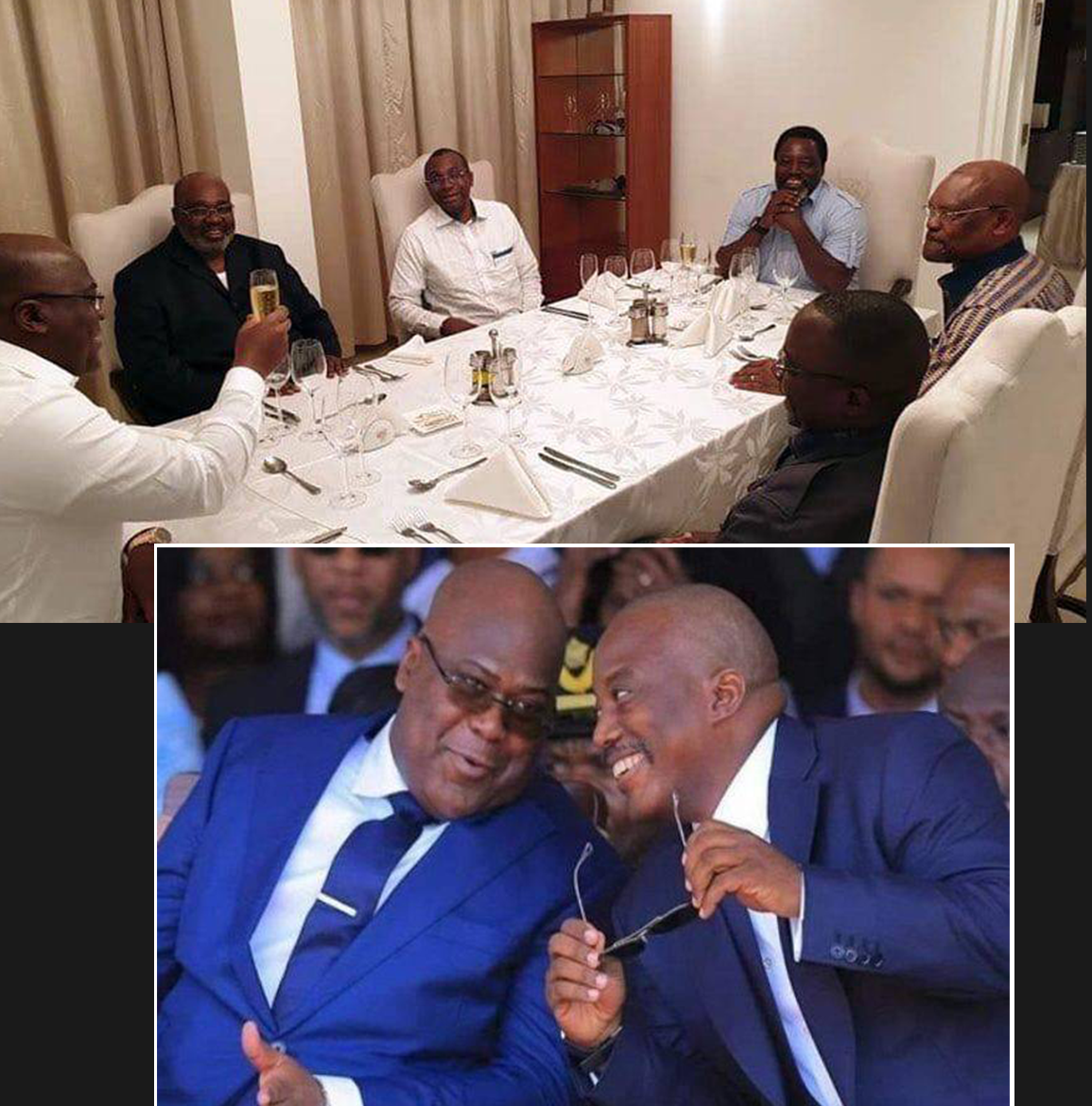
At a time when regional and international efforts are focused on bringing lasting peace to eastern DRC, warmonger Tshisekedi has once again chosen the path of provocation over reconciliation.
During a meeting with members of the Congolese diaspora following a football match between the DRC and Portugal, Tshisekedi delivered remarks that have raised serious concerns about his commitment to peace. Rather than promoting unity and dialogue, he resorted to inflammatory rhetoric that undermines ongoing diplomatic efforts aimed at ending the deadly conflict.
The most controversial part of his speech was his attack on former President Joseph Kabila. Tshisekedi claimed that “Rwandans” had removed Laurent-Désiré Kabila and replaced him with “their dog,” referring to Joseph Kabila.
“The enemies had entered; we were distracted. They even removed a son of the country, Laurent-Désiré Kabila, and placed their dog, Joseph Kabila, whom they could train as they pleased,” Tshisekedi said.
Such language is shocking coming from a sitting president. Calling a former Head of State, a “dog” is disrespectful, irresponsible, and unworthy of a leader entrusted with preserving national unity.
Tshisekedi’s agenda of persistently targeting Kabila, a man who amicably handed power to him, and insulting him only deepens divisions and distracts from the real challenges facing the Congolese people. This sudden revision of history raises questions about political consistency and gratitude.
Even more concerning was Tshisekedi’s continued portrayal of Rwanda as an enemy, despite ongoing diplomatic efforts aimed at easing tensions between the two countries. His remarks come at a particularly sensitive moment, as international partners, including the United States, have invested considerable effort in encouraging dialogue and supporting peace initiatives between Kigali and Kinshasa.
When a president publicly labels a neighboring country as an enemy while simultaneously participating in peace processes, it inevitably raises doubts about the sincerity of those commitments. Peace agreements cannot succeed if hostile rhetoric continues to dominate public discourse.
Tshisekedi further fuelled concerns when he spoke about military objectives in eastern DRC, declaring that Bukavu and Goma would soon be captured. Such statements appear difficult to reconcile with the spirit of a ceasefire and ongoing peace negotiations.
The international community continues to witness Tshisekedi’s troubling behavior yet remains silent, despite the fact that he has made it clear he does not want peace just because his political survival largely depends on the ongoing conflict in eastern DRC.
If peace is truly the objective, words must align with actions. Statements that inflame tensions, insult political opponents, and cast doubt on signed agreements do little to inspire confidence in the future of peace efforts in eastern DRC.
 ellenkampire
  mkuser12