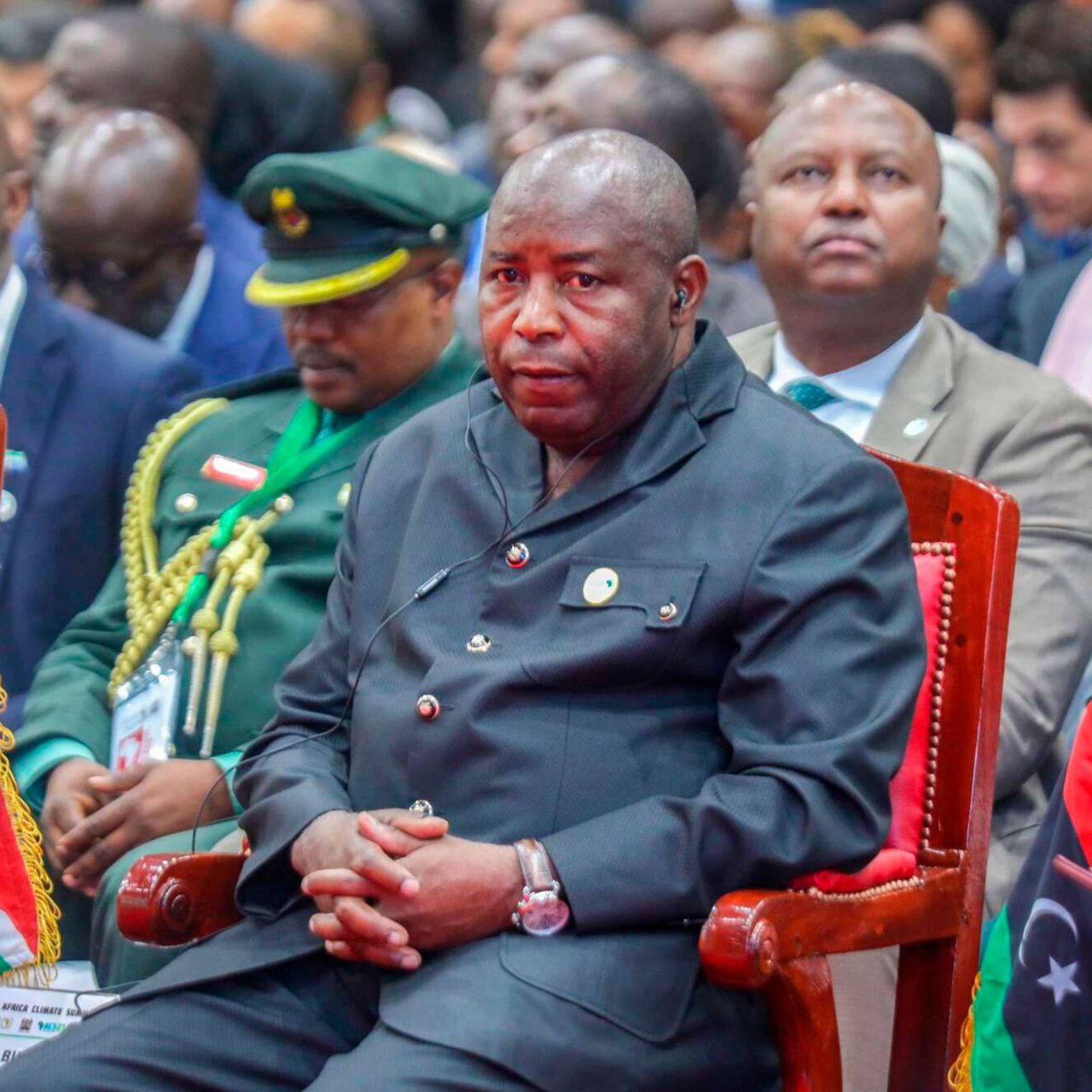
It is has been six years since Évariste Ndayishimiye was sworn in as Burundi’s 10th president. Far from ushering in progress, his tenure has been marked by a deepening of the country’s challenges politically, economically, and in terms of regional security, the Burundian ruler has turned hopes into disappointments.
Over the years, Ndayishimiye has become a failure domestically and regionally in many ways.
Poor political environment in Burundi
Since Ndayishimiye took office in June 2020, Burundi’s political landscape has steadily deteriorated, marked by escalating repression and a clampdown on dissent. Despite initial hopes for reform, the environment for political opposition, civil society, and independent media remains perilous and tightly controlled.
The National Congress for Liberty (CNL), the main opposition party led by Agathon Rwasa, has borne the brunt of this repression. CNL members are frequently arrested, intimidated, or disappeared. Extrajudicial killings, abductions, torture have become the order of the day under Ndayishimiye.
The judiciary remains weak and heavily politicized, offering little recourse for those targets. Between 2021 and 2022, dozens of opposition supporters were detained in the northern provinces of Kirundo and Muyinga.
In September 2022, Ndayishimiye dismissed then-Prime Minister Alain Guillaume Bunyoni and several senior officials, citing an alleged coup plot.
In 2023, the government intensified its crackdown on civil society, targeting organizations accused of receiving foreign funds to “destabilize” the state.
The repression extended into 2024 with the arrest of several human rights defenders linked to local NGOs. Human Rights Watch has documented multiple cases of torture against detainees in recent months.
The ruling CNDD-FDD party claimed a landslide victory in a June 5 parliamentary election, securing all 100 directly contested seats in the National Assembly with an estimated 96 to 97 percent of the vote, effectively excluding opposition parties from legislative representation.
Human Rights Watch and other organizations accused Burundian authorities and affiliated youth militia, Imbonerakure, of using intimidation tactics to ensure the ruling party’s complete sweep. The organization reported that voters were ‘’intimidated, harassed and threatened” in a widespread campaign to suppress dissent and manipulate the electoral process.
Failed economic landscape of Burundi
From 2015 to 2019, Burundi had been the world’s poorest country until South Sudan’s spiraling political and security crisis pushed it to the bottom of global poverty rankings. Despite hopes for change under Ndayishimiye, the country has seen little to no progress.
Instead of addressing deepening economic crisis marked by rising inflation, chronic food insecurity, and a severe shortage of foreign currency, Ndayishimiye has prioritized personal and familial enrichment, leaving Burundians to continue suffering under dire conditions.
Ndayishimiye has totally taken control of Burundi’s key business sectors, with his wife being in charge of fuel imports, his daughter and son dominate the pesticide and clothing import businesses.
The monopolized market led to economic hardships, restricting opportunities for investors, as Ndayishimiye sought to control everything on his own despite lacking sufficient funds and knowledge to do so.
The situation was further inflamed by the closure of Burundi’s border with Rwanda. The decision has had far-reaching consequences for ordinary citizens, who now face higher prices for imported goods. Rwanda served as the most accessible transit route for imports arriving through the ports of Mombasa and Dar es Salaam. The border closure also cut off access to one of the most profitable export markets for Burundian products, worsening the trade imbalance.
According to the World Bank, 87 percent of Burundians live on less than USD 1.90 a day. The country’s economy remains stagnant, hampered by unsustainable debt, persistent foreign currency shortages, and a lack of long-term growth strategies.
An actor in the deterioration of regional security
When the Democratic Republic of Congo officially joined the East African Community (EAC) in 2022, the regional bloc pledged to help stabilize the country’s conflict-ridden eastern region, a commitment that was soon betrayed by the very leader tasked with overseeing it.
During Ndayishimiye’s tenure as chair of EAC, the bloc deployed its regional force- EACRF to eastern DRC to address the resurgence of the M23 rebel group. However, the Burundian contingent operating under Ndayishimiye’s command acted beyond the official mandate of the very mission he was overseeing.
Instead of focusing on supporting the political process, protect civilians and supporting peace agreements, Burundian troops aligned themselves with Congolese army and notorious state-funded local militias known as “Wazalendo” to engage directly in fights against the M23 movement forces.
In August 2023, Ndayishimiye signed a bilateral military pact with his Congolese counterpart Felix Tshisekedi that saw, up to now, more than 20 000 Burundian soldiers, in 20 battalions, being deployed to volatile eastern DRC.
Ndayishimiye is the only regional president to align fully with Tshisekedi in rejecting political solutions in favour of a purely military approach, which yielded nothing more than exacerbating the crisis.
The duo has significantly destabilized the region, supporting armed groups that threaten neighboring countries, including Rwanda. Their actions have undermined regional cooperation and diplomacy, culminating in the closure of borders between Rwanda and Burundi.
Six years into his presidency, Ndayishimiye has not delivered the reforms or stability Burundians hoped for. Instead, his rule has been defined by growing authoritarianism, economic mismanagement, and destabilizing regional interventions.
With worsening repression at home and poor foreign policy, Ndayishimiye has emerged as a source of instability rather than the transformative leader Burundi needs.
 ellenkampire