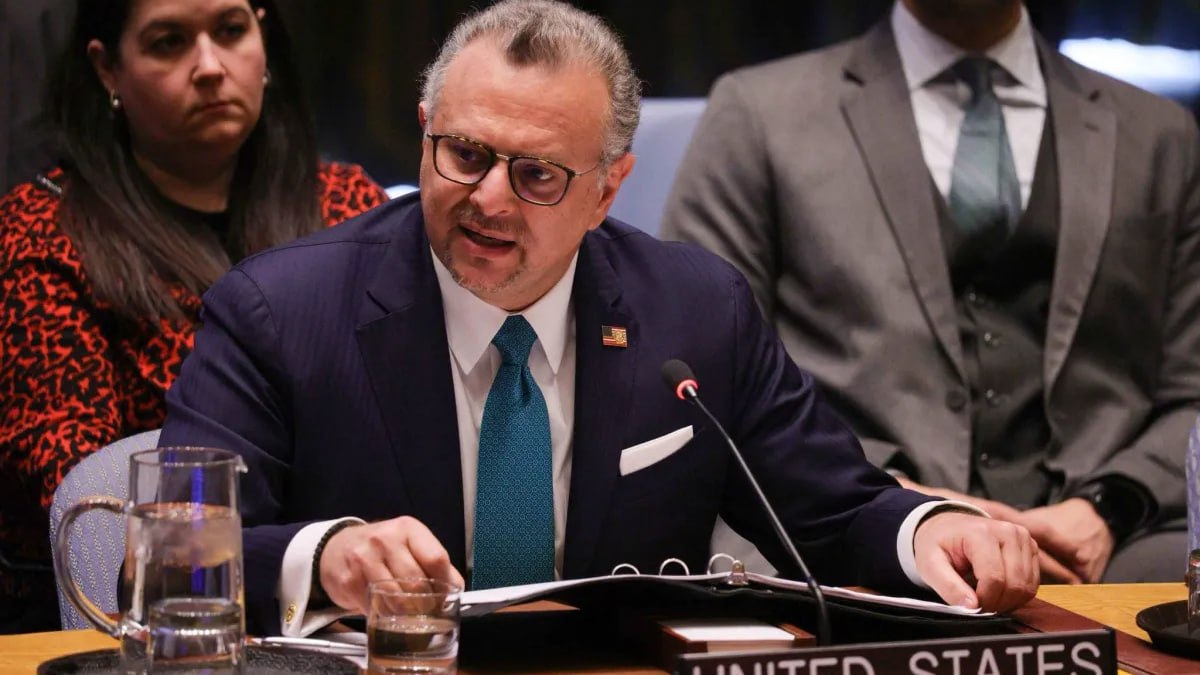
At the recent session of the United Nations Security Council, President Donald Trump’s senior advisor for Africa, Massad Boulos once again called on Rwanda to lift its defensive measures.
In the same statement, he noted that the regime of Félix Tshisekedi had “committed to immediately neutralize the FDLR in the areas under its control.”
Taken together, Rwanda is expected to scale back its security posture because Kinshasa has made a promise.
This is where the contradiction lies.
It is difficult to justify asking a country to lower its guard based on a commitment from a government that has repeatedly shown little political will to follow through. A promise, however well worded, is not a guarantee of action. It cannot be the basis for another country’s security decisions.
More concerning is what this position reveals. It suggests a tendency to downplay the threat posed by the FDLR.
As Rwanda’s Permanent Representative to the UN, Martin Ngoga, reminded the Council, the FDLR is not an ordinary armed group. It was formed by remnants of those responsible for the 1994 Genocide against the Tutsi. Its ideology has not changed, and neither has the danger it represents.
This assessment is not unique to Rwanda. Even within the United States government, there has been acknowledgment of this reality. Sarah Troutman previously told the House Foreign Affairs Subcommittee on Africa that the FDLR is a legitimate threat that must be neutralized.
That is why the current posture appears inconsistent.
Rwanda, as a concerned party that has expressed willingness to engage under frameworks such as the Washington peace efforts, would reasonably expect a degree of impartiality from mediators. That expectation is undermined when its security concerns are treated as secondary, while assurances from Kinshasa are taken at face value.
Peace cannot be built on selective recognition of threats.
It becomes even harder to sustain confidence in such an approach when recent events point to ongoing instability. The drone attack that killed a UN humanitarian worker, Karine Buisset, along with other civilians, is a reminder of the realities on the ground. It raises serious questions about the reliability of the very Tshisekedi regime being trusted to restore order.
If anything, such incidents reinforce the need for caution, not complacency.
For peace to have a chance, the same standard must be applied to all parties. Asking Rwanda to abandon measures it considers essential to protect its citizens, while placing faith in untested commitments from a regime that tolerates or collaborates with hostile armed groups, risks deepening mistrust.
 ellenkampire