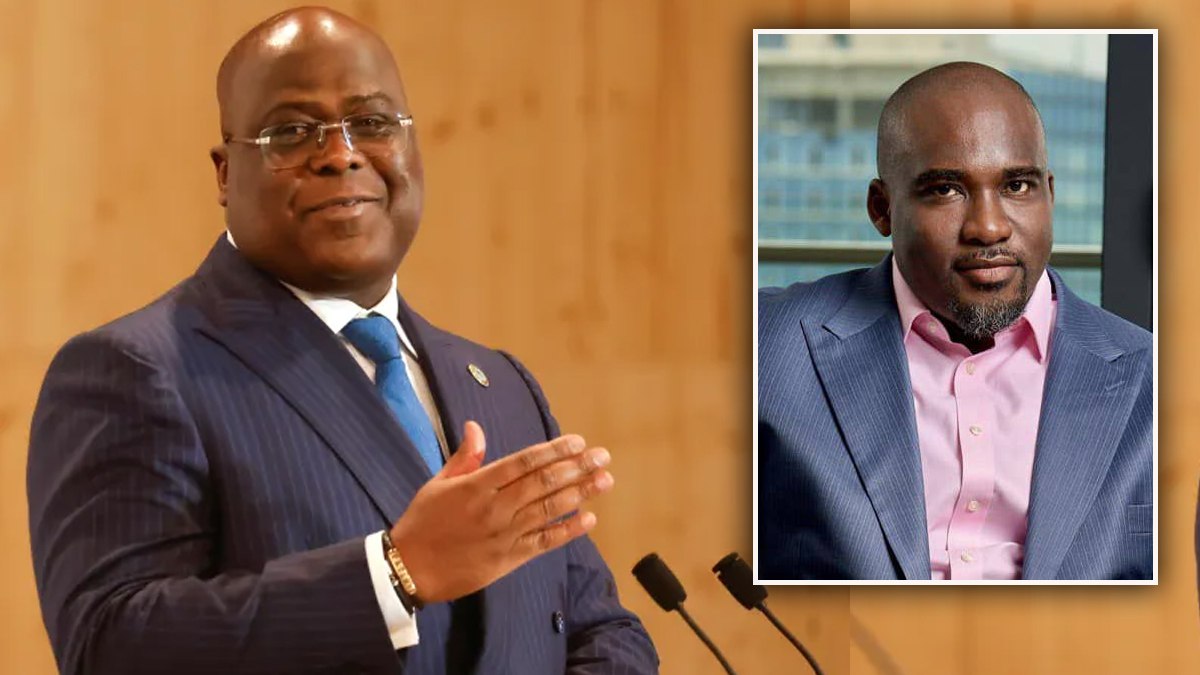
President Paul Kagame recently revealed that the son of Juvénal Habyarimana has been making quiet trips to Kinshasa to meet Félix Tshisekedi.
Since that remark, anti Rwanda reactionaries have suddenly ramped up their affection for the Habyarimana name. Social media posts and political gossips are now busy polishing the image of the former dictator and elevating his son, Jean‑Luc Habyarimana, as if he were some kind of political messiah or heir waiting for Rwanda.
The attempt is laughable. Juvénal Habyarimana was not a misunderstood leader. He was the architect of a regime that institutionalized ethnic hatred and exclusion. The ideology that culminated in the 1994 Genocide against the Tutsi did not appear overnight. It was cultivated for years under his rule through discrimination, propaganda and the systematic preparation of violence. No amount of revisionism can wash away that record.
Jean Luc Habyarimana should therefore understand the weight of the name he carries. Political ambition is not built on selective amnesia. One cannot simply detach the surname from the crimes that defined it and expect society to pretend nothing happened.
Tshisekedi noisemaker might feeding Jea Luc an idea that he could somehow emerge as a political figure for Rwanda, but that is a dangerous illusion manufactured by people who neither understand Rwanda nor care about the consequences of their games.
History offers a simple comparison. The relatives of Adolf Hitler never contemplated launching political careers in modern Germany. The weight of that past alone makes such ambitions unthinkable. Yet here we are, watching some circles encourage the son of the man whose regime laid the groundwork for genocide to imagine a political future.
There is also a familiar pattern in these schemes. The same external networks once convinced figures like Victoire Ingabire and Paul Rusesabagina that they could challenge or even overturn Rwanda’s leadership with a Hutu power ideology. They were told the ground was fertile and the moment was right, but reality proved otherwise. Those illusions collapsed spectacularly.
Jean Luc Habyarimana should take note before walking the same road paved by outside manipulation and empty promises.
And there is another uncomfortable truth. The themes that are often packaged as “new political agendas” for Rwanda, unity, reconciliation, development, prosperity, are not missing pieces waiting to be invented. They are already pillars of the country’s trajectory today.
In other words, the supposed political space some are trying to manufacture around the Habyarimana name simply does not exist. What exists instead is memory, and memory will defeat propaganda.
 ellenkampire