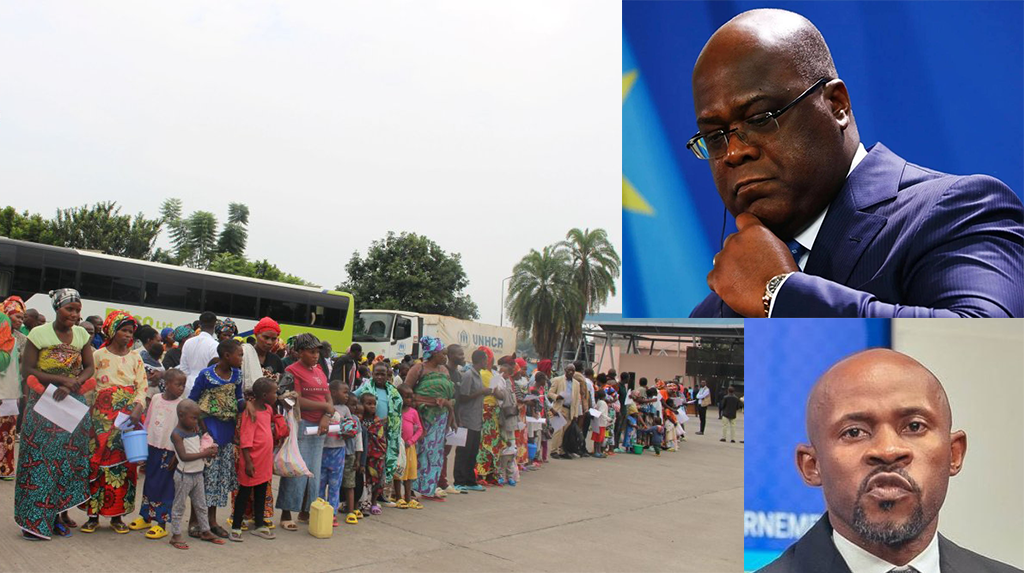
Yesterday’s repatriation of more than 500 refugees held hostages previously by Kinshasa and its allies left the Tshisekedi regime foaming at the mouth with anger.
Regime mouthpiece Patrick Muyaya and his propaganda machine quickly claimed that these people were “forcefully” repatriated. And of course, that version was convenient to them. It showed Tshisekedi’s regime had no intention of bringing them home in dignity.
This was not even the first time. In May, another 360 refugees were successfully repatriated. Step by step, the hostage cards Kinshasa had held so tightly are being taken away.
Since 1996, Rwanda has consistently campaigned for the peaceful return of all refugees. The principle was simple: no one should remain a refugee in a liberated country. Even those who committed genocide against Tutsis were not exempt. They, too, had a path, face justice first, then reintegrate into society. That was how Rwanda sought to close the refugee chapter once and for all.
To underline that resolve, Rwanda enforced the cessation clause on 30 June 2013, in coordination with UNHCR. The message was clear: after that date, no Rwandan should still be called a refugee. Yet Kinshasa brushed it aside with its familiar laisse-faire attitude. Instead of helping people return home, it continued to harbor FDLR remnants, genocidaires armed and nurtured as a proxy force against Kigali.
For Kinshasa, refugees are not citizens to be cared for. They are assets to be monetized and weaponized. The more displaced people it showcases, the more money flows from UN agencies and Western donors. Camps in North Kivu and Ituri are not just shelters, they are revenue streams. Food, tents, and water projects are funded in their name, but the money disappears thereafter.
This is why yesterday’s M23-led repatriations struck such a nerve. They exposed the scam. Refugees going home means fewer hostages to wave before donors, fewer excuses at Geneva, fewer glossy reports to plead for fresh funding. When citizens return by their own will, Kinshasa loses both its bargaining chips and its steady stream of pity money.
Thus, the story is not about “forceful return.” It is about a government that failed its own citizens, weaponized their misery, and mourns not their suffering but the drying up of a political and financial scheme.
Kinshasa lost its hostages. That is the only tragedy it sees.
 ellenkampire