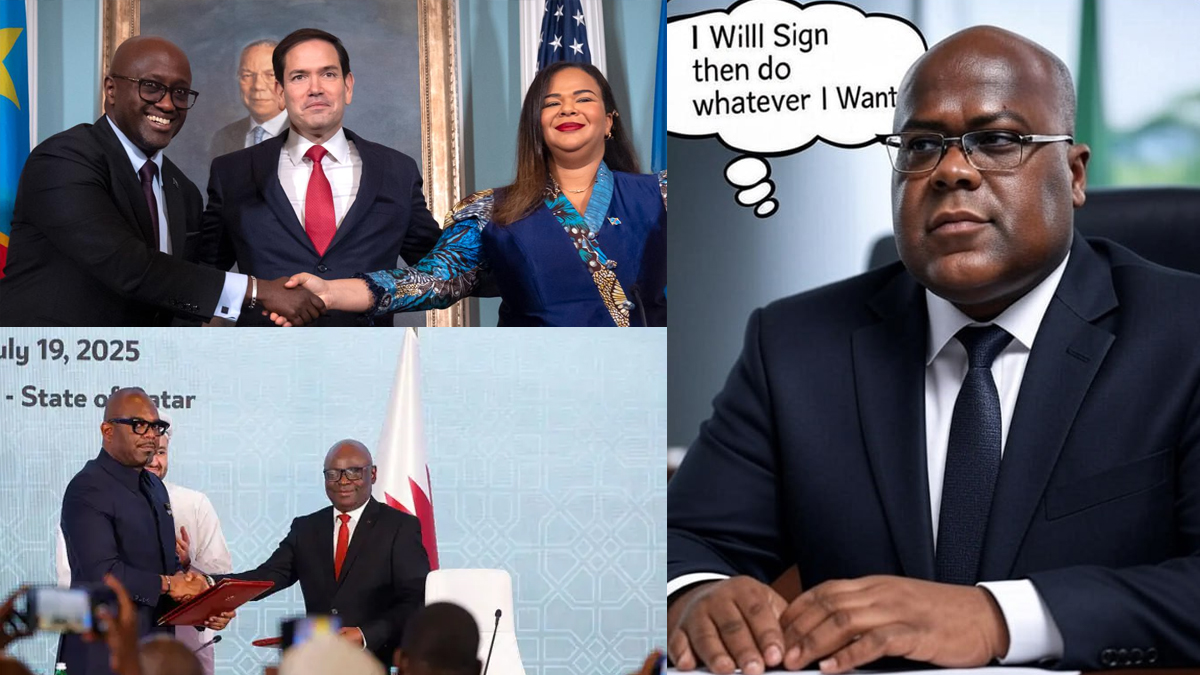
One month after the signing of the Washington peace agreement and 15 days since the Doha Declaration of Principles, the Tshisekedi regime has displayed a consistent disregard for the peace frameworks meant to end conflict.
The Washington agreement called on Kinshasa to neutralize )and repatriate) its Rwandan genocidal allies, FDLR in exchange for Rwanda scaling down its defensive measures along the borders. But instead of moving toward disarmament, Kinshasa has relocated thousands of FDLR elements to neighboring Burundi.
The terrorist force is undergoing training, for armed attacks aimed at destabilizing eastern DRC and threatening Rwanda, while fantasizing about capturing Bukavu and Goma.
Warmonger Tshisekedi not only funds and arms these militias, but he legitimizes them. Just last week, Congolese state officials reportedly issued certificates of recognition to FDLR faction leaders. This reflects a deeper issue: peace agreements mean little when the same regime signing them continues to mobilize armed groups and incite xenophobic rhetoric to fuel their campaigns.
The Doha Declaration of Principles, signed between Kinshasa and the AFC/M23 movement, was intended to complement the Washington deal. While the AFC/M23 has upheld its commitments, releasing both political and military prisoners, the Kinshasa regime has refused to reciprocate.
Instead of honoring its pledges, Tshisekedi’s criminal regime has launched new military operations in Uvira. With the help of foreign mercenaries, Burundian forces, and the Wazalendo militia, Kinshasa is openly violating the Doha terms by targeting areas held by M23. This signals not just a breach of recent agreements but a continued legacy of sabotaging nearly every peace accord it has signed.
While Kinshasa tries to portray itself as a victim of external aggression, specifically from Rwanda, it is simultaneously supporting the FDLR in launching cross-border attacks intended to destabilize the Rwandan government. These actions cast serious doubt on the DRC’s commitment to peace and expose a dangerous hypocrisy in its regional policy.
If lasting peace is to be achieved in the Great Lakes region, the international community, particularly the United States, must hold the DRC accountable.
Washington must ensure that its agreements are enforced and that Tshisekedi’s regime ceases military offensives, respects ceasefires, and ends its support of genocidal militias.
For now, hope for peace hangs in the balance. The agreements remain ink on paper unless there is political will and external pressure to bring about real change.
 ellenkampire