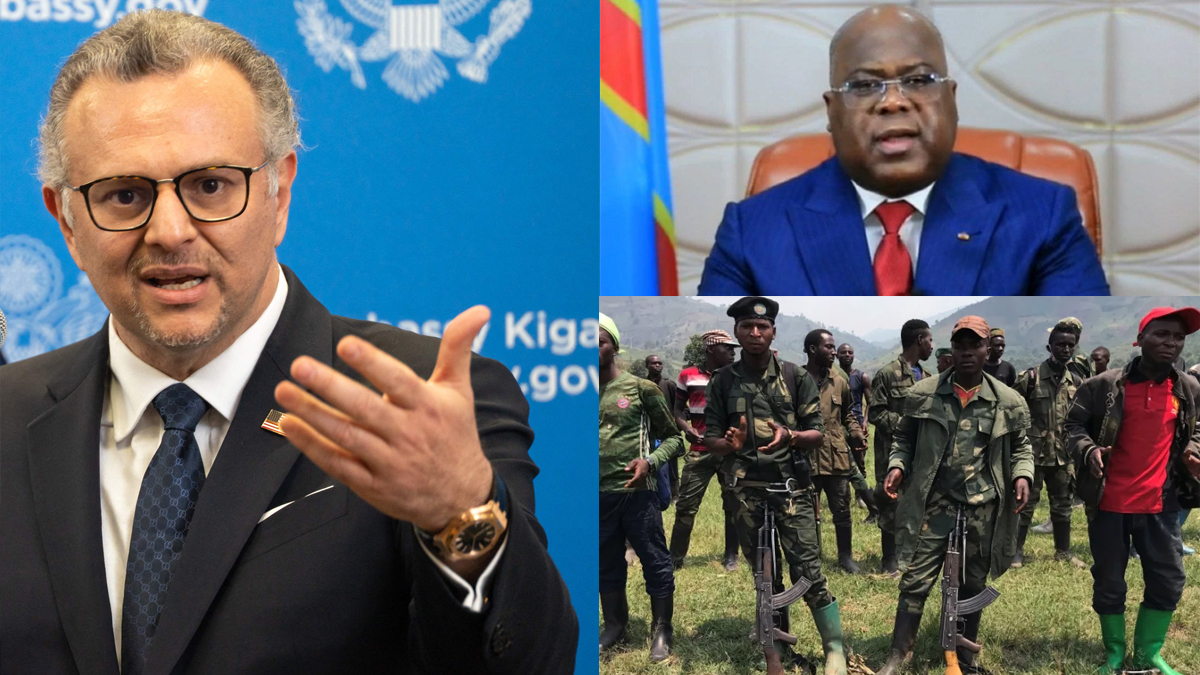
On Thursday, U.S. Senior Advisor for Africa Massad Boulos sounded hopeful. After holding discussions with Presidents Paul Kagame and Félix Tshisekedi, he declared that the region is finally on the path to peace.
But that hope is misplaced. The Tshisekedi regime is not serious about peace. It never was.
Just look at the actions of his top officials. DRC’s Foreign Affairs Minister, Kayikwamba Therese Wagner, is still spreading falsehoods about Rwanda. In an interview with German media, Deutsche Welle, she accused Rwanda of violating Congolese sovereignty and blamed it for “tens of thousands of Congolese deaths.”
That single interview was enough to kill the optimism the world had for the peace deal expected to be signed in June 2025. You cannot talk peace while throwing around reckless accusations. You cannot ask for international support while insulting your neighbors and misrepresenting the facts.
Rwanda, the usual scapegoat, has suffered. Tshisekedi’s aggression didn’t stop at the M23 movement in eastern Congo. His military action spilled into Rwanda, killing 16 civilians in Rubavu, injuring 161 more, and destroying 200 homes.
And now, the same regime that’s negotiating with M23 in Doha wants the world to mechanically believe that M23 is a proxy for Rwanda. While they conveniently hide the fact that DRC continues to support the FDLR, a genocidal militia with a long history of trying to destabilize Rwanda.
Tshisekedi’s regime wants to confuse, deflect, and delay. It wants international sympathy without taking responsibility for the chaos it helped create. It wants peace on paper, but not in practice.
The people of the Great Lakes region are desperate for peace. They’ve endured enough suffering. But peace cannot come when one party keeps playing games.
At this point, the U.S. must ask hard questions. Is it still worth investing time and energy into a regime that has no political will for peace? Are we watching another round of wasted diplomacy unfold?
 ellenkampire