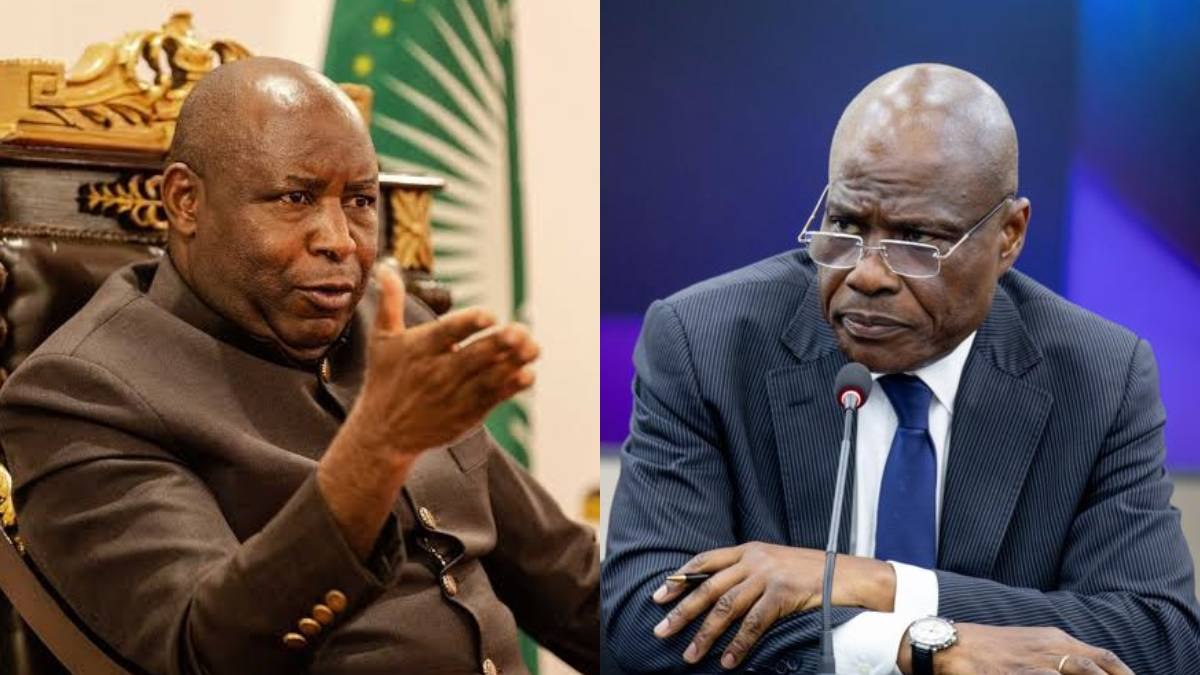
At the request of Congolese President Félix Tshisekedi, Burundian President Évariste Ndayishimiye recently hosted Congolese opposition figures in what was presented as an effort to promote dialogue and resolve internal political tensions. But behind the language of reconciliation lies a deeper question: is Burundi truly mediating Congo’s crisis, or has it become a political lifeline for a regime facing growing pressure at home?
Ndayishimiye’s entry into the process followed the collapse of Angola’s mediation efforts led by President João Lourenço. With Luanda stepping back, Bujumbura moved forward. Yet the choice of Burundi immediately raised questions about neutrality. A mediator is expected to stand above the conflict, not participate in it.
Ndayishimiye is not an impartial peace broker, something the AFC/M23 cadre Bertrand Bisimwa was quick to point out. His intervention appears less about opening genuine political dialogue and more about reducing pressure on the Congolese president ahead of the end of his mandate in 2028. The greatest concern is that this political partnership is aimed at redirecting Congo’s internal failures toward external enemies and vulnerable Congolese communities.
During his engagements in Kinshasa, Ndayishimiye told Congolese that they have a “common enemy,”. Many understood what his coded message was: the enemy is Rwanda and the Congolese Tutsi community. Such rhetoric reinforces anti-Tutsi narratives and contributes regional tensions.
Messaging like this does not create peace; it deepens divisions that have repeatedly fuelled instability in the Great Lakes region. A leader calling for dialogue cannot simultaneously encourage narratives that stigmatize an entire community.
The controversy is further intensified by Burundi’s military involvement in eastern Congo. Burundian forces have operated alongside the FARDC and allied armed groups in the fight against the AFC/M23 movement forces.
More worryingly, they participated in attacks against Tutsi villages in Nturo, North Kivu, in 2023, and since 2024 they have been involved in attacks against Minembwe, South Kivu, which has become the last refuge for the Banyamulenge community. Burundi’s role has transformed it from a possible mediator into an active belligerent in the conflict and an accomplice in war crimes.
The political symbolism of Ndayishimiye’s engagement with opposition leader Martin Fayulu has also attracted attention. Fayulu has repeatedly used hate speech toward the Congolese Tutsi community, particularly in his political messaging concerning regional security issues. It is unsurprising that from the AFC/M23 perspective, the convergence between Ndayishimiye and Fayulu represents not a neutral search for peace, but an alliance built around a shared political narrative, one that places blame on Rwanda and Tutsi communities rather than confronting Congo’s internal challenges.
This approach risks turning Congo’s crisis into a permanent search for external and internal enemies, while avoiding difficult questions about governance, armed groups, corruption, and political accountability.
Peace cannot be achieved through military alliances, ethnic narratives, or political arrangements designed to protect individuals in power and ethnically cleanse sections of the Congolese population. Quite the opposite. Congo needs a mediation process based on trust, neutrality, and a willingness to address the root causes of conflict.
Until then, many Congolese will continue to question whether Gitega’s involvement is truly about saving Congo or about saving Tshisekedi.
 ellenkampire
  mkuser12