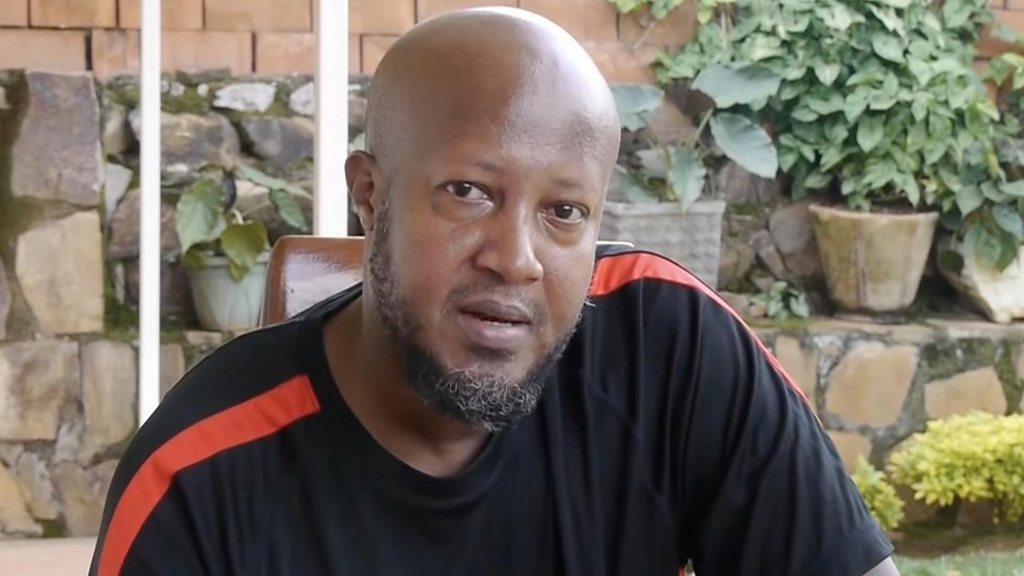
The unfortunate death of Karasira Uzarama Aimable has once again exposed how far some people are willing to go in politicizing human tragedy for selfish political interests. Instead of allowing a family and loved ones to mourn with dignity, certain individuals and groups immediately rushed to social media to spread conspiracy theories, weaponize grief, and push anti-Rwanda narratives.
According to the official statement released by the Rwanda Correctional Service (RCS), Karasira died at Nyarugenge Hospital following an overdose of prescribed medication. He had just completed his five-year sentence at Nyarugenge Correctional Facility and had already signed his release papers.
The RCS spokesperson, Chief Superintendent of Prison-CSP Hillary Emmanuel Sengabo explained that while waiting for his personal belongings and for relatives to pick him up, Karasira consumed large quantities of medicine that had been prescribed for a pre-existing condition.
What makes the politicization of this tragedy even more disturbing is that Karasira himself had, on several occasions in the past, spoken openly about suicidal thoughts and previous attempts to take his own life. He had mentioned before that he once overdosed on sleeping pills but survived. Sadly, this latest attempt ended differently.
Yet, before facts could even settle, the internet was flooded with accusations from anti-Rwanda elements, dissidents, genocidaires and their descendants as well as genocide deniers, and habitual propagandists claiming that the Rwandan Government had “assassinated” one of its critics.
They don’t care to explain why, if that was the case, the government would have waited until the last day of Karasira’s imprisonment, with journalists present around the correctional facility, to assassinate him. If the intent was to silence a dissident, as they claim, surely there were better opportunities during the previous five years.
Their reactions reveal something deeper and more troubling: the lack of humanity and basic moral values behind that anti-Rwanda crusade.
It is no coincidence that many of those pushing these claims also recycled long-standing falsehoods about the history of the Genocide against the Tutsi, attempting once again to distort facts and manipulate emotions for political gain.
The irony is impossible to ignore. Some of the very individuals attempting to portray themselves as defenders of Karasira are people linked to circles that have consistently minimized, denied, or distorted the Genocide against the Tutsi. Seeing genocide deniers suddenly presenting themselves as protectors of a genocide survivor exposes the level of hypocrisy involved.
For years, Rwanda has faced organized campaigns aimed at discrediting its institutions and leadership. Certain actors, backed by hostile networks and foreign sympathizers, have made it their mission to fabricate narratives, amplify misinformation, and exploit every sensitive incident to tarnish the country’s image on the international stage.
Karasira’s death has now become another tool in that propaganda machine. What is especially dangerous is how quickly facts are abandoned in favor of baseless, emotionally charged accusations. To these groups, any individual who once criticized the government is immediately transformed into a political symbol whose death must automatically become a “state crime,” regardless of evidence or circumstances.
This is not about seeking truth. It is about sustaining a narrative. Some seem unable to accept that criticism of leadership does not place someone above the law or outside accountability. Karasira was not imprisoned because he criticized the government; he was convicted through impeccable legal processes conducted by independent courts. But for propagandists, facts rarely matter.
What we are witnessing today is part of a broader pattern where Rwanda’s detractors constantly shift narratives whenever previous accusations fail. When old claims lose credibility, new fabrications emerge.
Such behavior is not only irresponsible; it is deeply inhumane. Death should never become a political weapon. Human tragedy should not be exploited for online propaganda, personal agendas, or ideological battles.
 ellenkampire
  mkuser12