
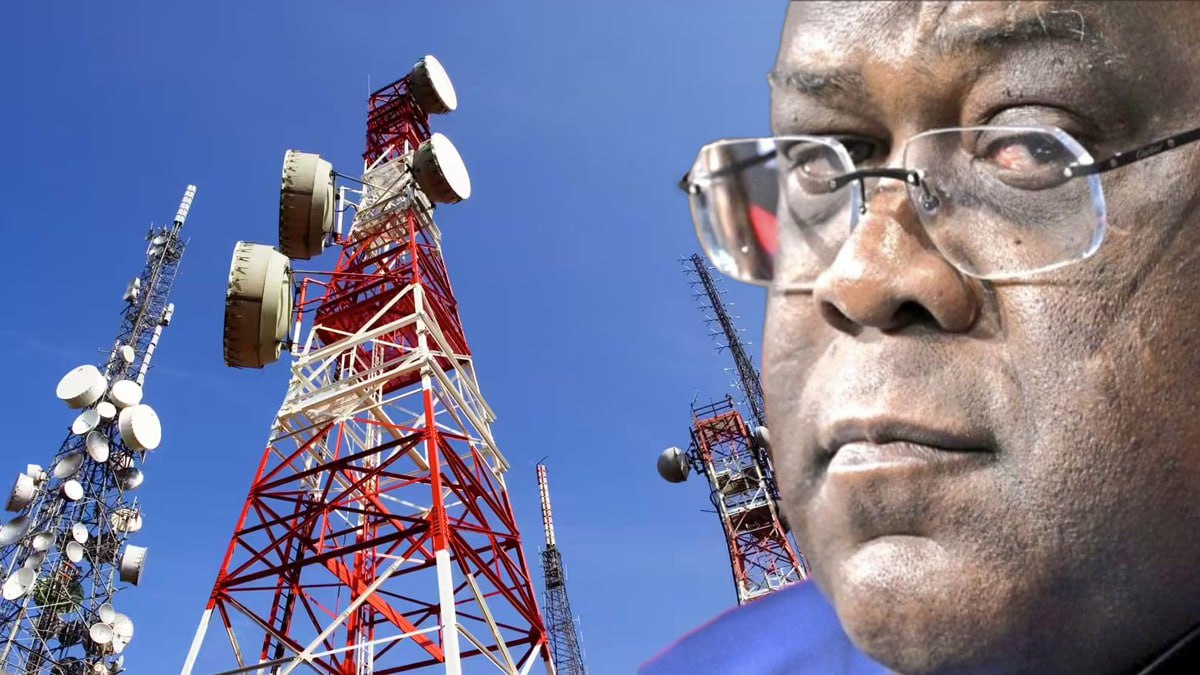
Once again, the incompetent regime in Kinshasa has pointed the finger at Rwanda, this time accusing Rwanda’s telecommunications company, MTN, of “intrusion” in Rutshuru, Goma, and Bukavu.
The Tshisekedi regime claims there is a “Rwanda telecommunications presence in North Kivu.” Yet, notably, no concrete evidence was publicly provided to substantiate the claims. It’s all very old and tiresome by now.
Whenever governance failures mount or public frustration rises, Rwanda’s name resurfaces in official statements.
Tshilombo’s communications minister Mpanda Kabangu now joins a growing list of cabinet members spanning agriculture, tourism, environment, mines, and other portfolios who have attempted to attribute internal failures to Kigali, but these endless accusations serve as convenient diversions from deeper structural failures.
Following the fall of Goma, Bukavu, and other parts of eastern DRC to AFC/M23 control, Kinshasa cut off several essential services, including banking and telecommunications. Major network operators such as Airtel RDC, Orange, and Vodacom experienced severe operational disruptions.
Dr. Oscar Barinda, deputy spokesperson of AFC/M23, has publicly rejected Kinshasa’s accusations, describing them as unfounded and politically motivated
Dr Barinda declared that operators were called upon to restore services under their local authority. Some cooperated. Others, including Vodacom, have declined, AFC/M23 claim alternative arrangements were explored, but deny that MTN Rwanda was officially brought in to replace Congolese operators..
In border regions across Africa, telecommunications spillover is common. Residents in areas near Goma and Bukavu sometimes pick up signals from neighboring countries, particularly when domestic networks are weak or disrupted.
Similarly, in Rutshuru, some communities have accessed stronger signals from MTN Uganda due to local outages or infrastructure limitations. Such cross-border signal overlap is not unusual in frontier zones where geography and network strength determine connectivity, not politics.
At a time when diplomatic efforts in Washington have faced setbacks and domestic pressures are rising, accusations against Rwanda may serve as a strategic distraction. Whether this approach reassures the public or further erodes credibility remains to be seen.
Telecommunications infrastructure failures require technical solutions, regulatory coordination, and political stability, not rhetorical escalation.
If Kinshasa believes foreign corporate intrusion is occurring, evidence should be transparently presented through regulatory and international legal channels.
Without that, repeated allegations risk being perceived as political maneuvering rather than fact-based governance.
 ellenkampire