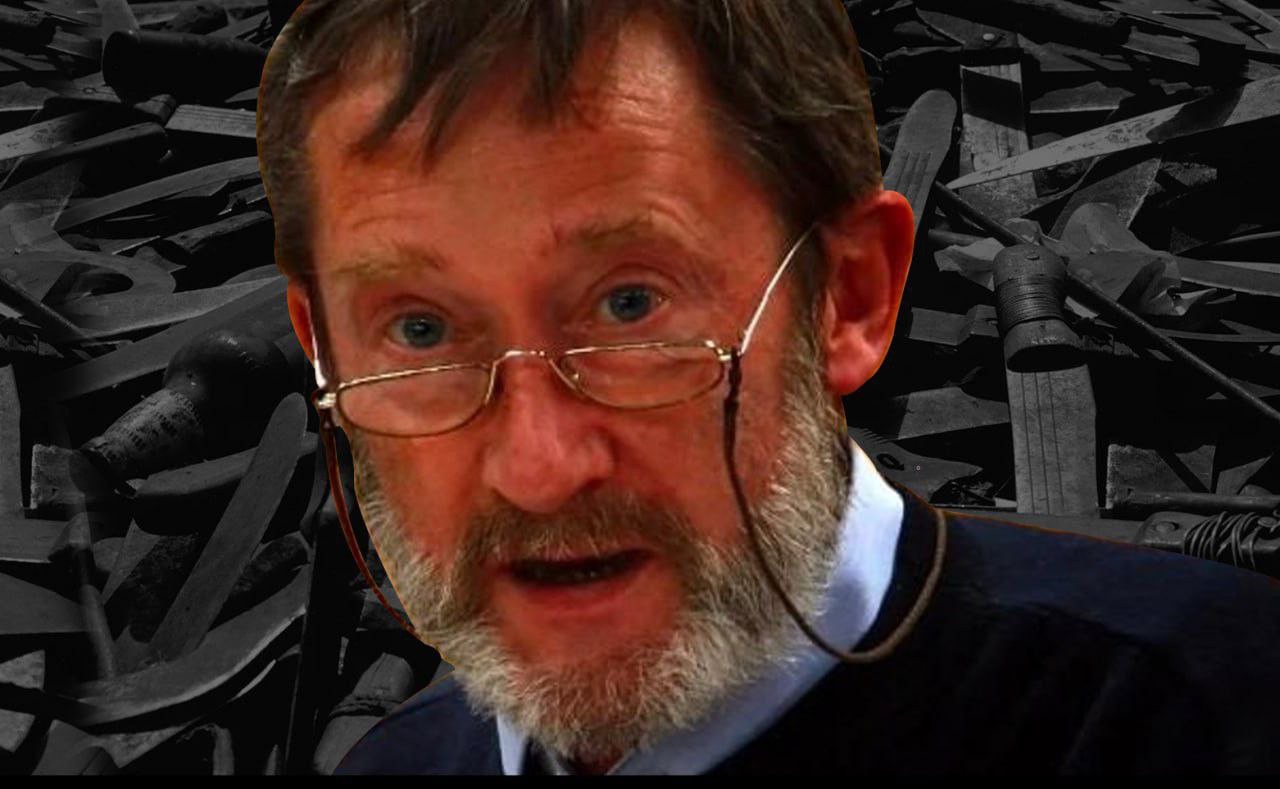
In the field of atrocity revisionism, few can match the audacity of Filip Reyntjens and his relentless attempt to cast doubt on Rwanda’s hard-fought liberation. In his work, “Post-1994 Politics in Rwanda: Problematizing ‘Liberation’ and ‘Democratization,'” Reyntjens shamelessly questions, “For whom?” as if the answer isn’t glaringly evident.
For whom, you ask? Well, let me enlighten you, Reyntjens. First, Rwanda’s July 4th liberation was for every Rwandan who had long suffered under the yoke of oppression within a society divided by the very chains you and your Belgian ancestors forged. It was for the survivors of the devastating 1994 genocide against the Tutsi, who found solace and hope in the dawn of a new era. It was for the mothers, fathers, and children who dared to dream of a nation built on unity, reconciliation, and progress.
Secondly, it is truly ironic, considering your own track record. Reyntjens, the man who aligned himself with the Habyarimana apartheid regime, turning a blind eye to its genocidal atrocities. The man who readily accepted the ethnicization of political life, the distortion of democracy, and the pervasive corruption, mismanagement, and impunity. Yes, Reyntjens, it seems you have conveniently forgotten your own past and the dark shadow it casts upon your credibility.
Let us not overlook Reyntjens’ early dismissal of the Rwandan Patriotic Front’s (RPF) liberation struggle in 1990 as “illegitimate.” Such a stance reveals his allegiance to the Hutu Power Tropical Nazism Regime, the very regime responsible for the 1994 genocide against the Tutsi that claimed the lives of over a million innocent Rwandans. It is astounding that someone with such a tainted past has the audacity to question the legitimacy of Rwanda’s liberation.
Reyntjens’ credibility is further eroded by his consistent failure to grasp the essence of the RPF and its ideology. He erroneously assumes that the RPF operates on an ethnic-based approach, completely disregarding the fact that their core values revolve around the liberation and progress of all Rwandans, transcending ethnic divisions. This fundamental misunderstanding taints his entire analysis and renders it deeply flawed.
But perhaps the most ironic aspect of Reyntjens’ criticism lies in his own intellectual and moral bankruptcy. Despite his insistence on imposing so-called ethnic divisions, a relic of his Belgian colonial ancestry, the Rwandan people have embraced unity and experienced the real fruits of liberation and democratization. But alas, Reyntjens, with his neocolonial mindset firmly intact, seems incapable of grasping the astounding transformation Rwanda has undergone.
 ellenkampire