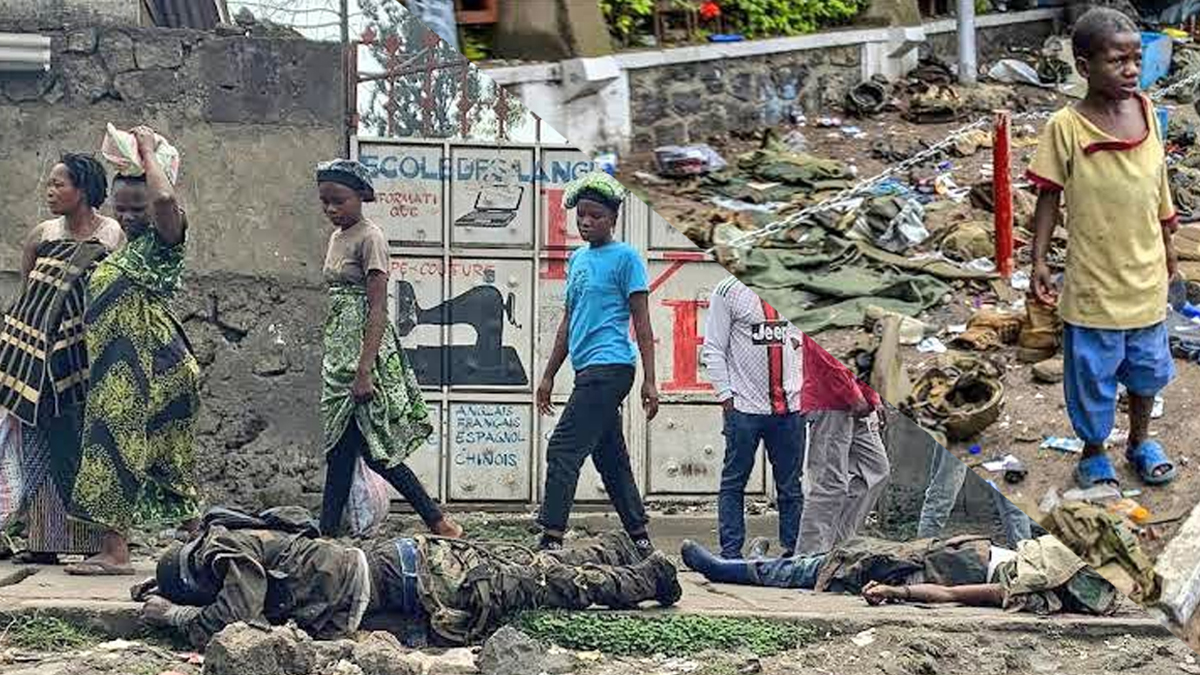
The ongoing conflict in eastern DRC has been marred by conflicting reports and narratives, particularly regarding the capture of Goma and Bukavu. The kinshasa regime and international rights organizations have continued to push an exaggerated death toll, blaming the M23 rebels and Rwanda for the violence. However, a closer look at the situation reveals a more complex reality.
While the Kinshasa regime claims that over 9,000 people have died in the conflict, Myriam Favier, head of the International Committee of the Red Cross (ICRC) sub-delegation in Goma, has provided a different figure. According to the Red Cross, they have buried around 900 bodies—far from the numbers officially stated byTshisekedi’s regime .
The truth is that while there have been civilian casualties, many of those who died were members of various armed groups, including: Wazalendo militias, FARDC , FDLR and Looters involved in the chaos
As the conflict unfolded, civilians in Goma scrambled to arm themselves, retrieving weapons from abandoned military posts and looted armories. Many joined FARDC soldiers and Wazalendo militias in uncontrolled acts of violence, indiscriminately firing bullets and launching grenades. This led to significant civilian deaths not necessarily at the hands of M23 rebels, as widely claimed.
Eyewitness testimonies from local civilians paint a different picture. Some soldiers and Wazalendo fighters reportedly entered homes not just to loot, but also to commit acts of rape and murder when faced with resistance. The systematic plundering of Goma, for instance, was primarily carried out by FARDC soldiers, Wazalendo militias and Escapees from Munzenze prison
Videos recorded in the aftermath of the chaos show military personnel and Wazalendo fighters breaking padlocks on store doors, often with the help of their own relatives including their wives who later participated in the looting.
One of the biggest failures in Goma was the lack of military leadership. Senior FARDC officers abandoned the city, leaving behind a disorderly mix of Wazalendo fighters, infantry soldiers, and members of the Presidential Guard (GR). With no central command, these groups acted on their own, leading to uncontrolled violence and lawlessness.
The kinshasa has placed sole blame on the M23 rebels, but testimonies from local civilians and victims’ families contradict this claim.
Assigning blame solely to external actors, while ignoring the role of state forces and local militias, only prolongs the cycle of violence. A transparent, fact-based approach is essential for justice and lasting peace in eastern DRC.
 ellenkampire