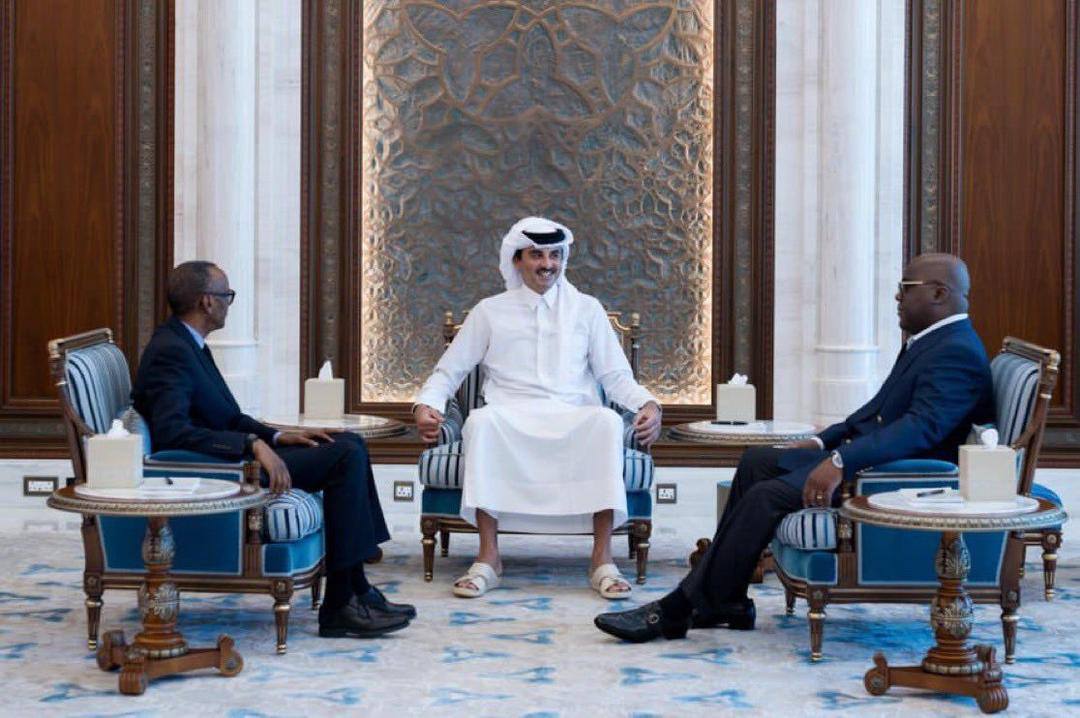
Last week, Qatar once again demonstrated to the world that it has secured a niche in handling contemporary disputes between nations. This was in total contrast to countries in the global north which remain stuck in outdated, ineffective methods of conflict resolution.
When the Emir of Qatar Sheikh Tamim bin Hamad invited both President Paul Kagame of Rwanda and Felix Tshisekedi of DRC, many wondered how he managed to bring together two heads of state in a such delicate and high-tense situation between Rwanda and DRC.
In a meeting that lasted only a few hours, Qatar successfully brokered a peace deal that had previously been difficult to secure. Both leaders affirmed their commitment to pushing for a ceasefire and maintaining continuous dialogue through the established Qatar framework, Luanda and Nairobi processes.
While many European countries hastened to issue and impose sanctions, acting on biasness, double standard, with imperialists motives, Qatar’s mediation skills stood in stark contrast.
A country like Belgium, despite its historical responsibility for destabilizing the Great Lakes region by meddling in internal politics and sowing division in both Rwanda and the DRC, has been leading efforts to rally Europe and America to sanction Rwanda – as if such actions would resolve the crisis.
Belgium among other countries should have learnt a lesson or two in the management of DRC crisis. Instead it decided to continue fueling the conflict in pursuit of its neo-colonial interests, which is totally counterproductive to peace.
Qatar’s mediation approach has undoubtedly displeased many, including Belgium and other nations eager to exploit the DRC’s resources. Yet, Qatar has not only positioned itself as an impartial and results-driven mediator but has also emerged as a global champion for peace.
It has further exposed the West’s hypocrisy, which would do very well to change, and undergo a complete do-over of attitudes.
 ellenkampire